

Vínculos mecánicos entre la disbiosis intestinal, la resistencia a la insulina y el trastorno del espectro autista
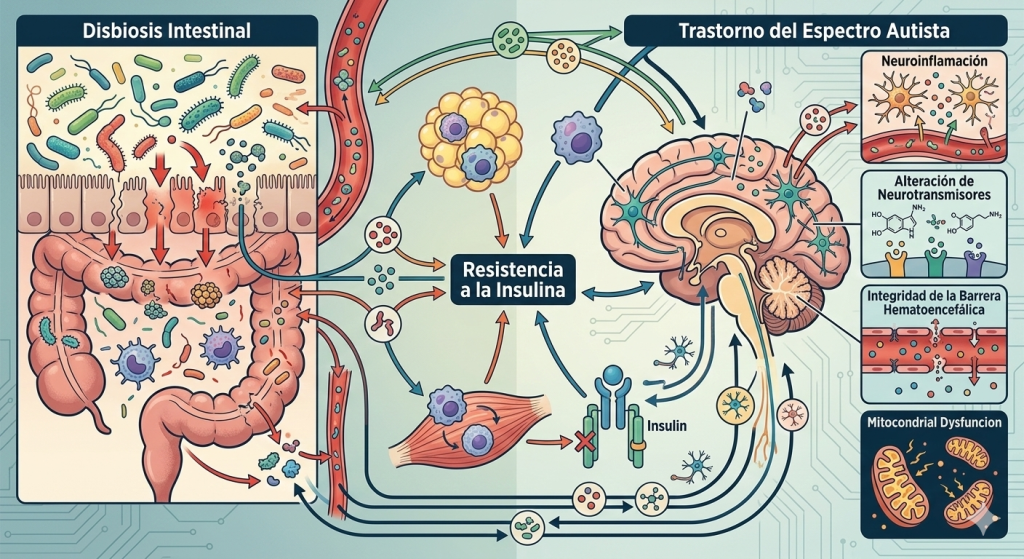
Encuentra más información en nuestro repositorio digital El trastorno del espectro autista (TEA) es una afección neuroevolutiva frecuentemente asociada con síntomas gastrointestinales, disbiosis intestinal y disfunciones metabólicas como la resistencia a la insulina (RI). Pruebas recientes sugieren que la microbiota intestinal puede influir en los procesos metabólicos y neurológicos a través del eje intestino-cerebro-metabólico. Esta revisión explora los mecanismos moleculares que vinculan la disbiosis, el IR y el ASD, centrándose en vías como la activación de TLR/NF-κ B, la disrupción de PI3K/Akt/mTOR y la acción de metabolitos microbianos como los ácidos grasos de cadena corta (SCFA), los lipopolisacáridos (LPS) y el ácido γ-aminobutírico (GABA). Discutimos cómo la disbiosis puede contribuir al aumento de la permeabilidad intestinal, la inflamación sistémica y la activación neuroinmune, afectando en última instancia el desarrollo del cerebro y el comportamiento. Las alteraciones microbianas comunes en los TEA e IR, incluyendo un aumento de Clostridium, Desulfovibrio y Alistipes, y una reducción de Bifidobacterium y géneros productores de butirato, sugieren una patofisiología compartida. También destacamos posibles estrategias terapéuticas, como la modulación de la microbiota, el tratamiento del factor de crecimiento similar a la insulina 1 (IGF-1) y las intervenciones dietéticas. La comprensión de estos mecanismos interconectados puede apoyar el desarrollo de enfoques dirigidos a la microbiota para los individuos con comorbilidades metabólicas del TEA. Accede al artículo completo aquí
Caracterización experimental de un panel híbrido fotovoltaico térmico (PVT) comercial en condiciones hidrodinámicas y térmicas variables
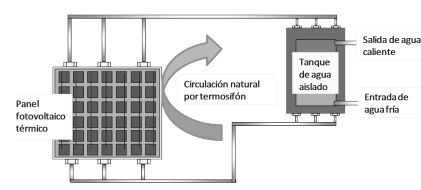
Encuentra más información en nuestro repositorio digital Los sistemas híbridos fotovoltaicos térmicos (PVT) ofrecen un enfoque prometedor para maximizar la utilización de la energía solar combinando la generación de electricidad con la recuperación de energía térmica. Este estudio presenta una evaluación experimental de un panel PVT comercialmente disponible, centrándose en su rendimiento térmico bajo diferentes temperaturas de entrada y caudales. El trabajo aborda una brecha en la literatura con respecto al comportamiento del mundo real de los sistemas integrados, particularmente en entornos residenciales donde las limitaciones de espacio y la eficiencia energética son cruciales. Se realizaron ensayos experimentales a tres caudales másicos y cinco temperaturas de entrada del agua, lo que demuestra que las temperaturas de entrada más bajas y los caudales más altos mejoran constantemente la eficiencia térmica. La mejor condición se alcanzó a 0,012 kg/s y 10 °C. Estos hallazgos profundizan nuestra comprensión del comportamiento térmico del panel y confirman su idoneidad para aplicaciones prácticas. La plataforma experimental desarrollada en este estudio también permite pruebas estandarizadas de PVT bajo condiciones controladas, apoyando una evaluación coherente a través de diferentes entornos y contribuyendo a los esfuerzos globales de optimización para las tecnologías solares híbridas. Accede al artículo completo aquí
Evaluación del comportamiento mecánico y potencial de aplicación de los paneles híbridos de polietileno-aluminio (LDPE-Al) de baja densidad y reciclado de Totora (Schoenoplectus californicus)
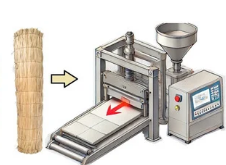
Encuentra más información en nuestro repositorio digital La creciente demanda de materiales sostenibles ha impulsado un interés significativo en los compuestos reforzados con fibras orgánicas, debido a su rendimiento mecánico, disponibilidad y menor impacto ambiental. Este estudio investiga el comportamiento mecánico de dos configuraciones compuestas: una tela cruzada y un panel tipo sándwich, ambos hechos de totora (Schoenoplectus californicus) y polietileno-aluminio de baja densidad (LDPE-Al). Nuestros resultados experimentales muestran que la variante de tejido cruzado logra una mayor resistencia al impacto (2,51 J), resistencia a la tracción (5,82 MPa) y mayor capacidad de deformación (6,76%), por lo que es más adecuada para aplicaciones que requieren absorción de energía y flexibilidad, como revestimientos interiores y muebles modulares. En contraste, la configuración de sándwich exhibió una rigidez superior (910 MPa), favoreciendo los paneles estructurales y los usos de techos de baja carga. Esta investigación se distingue por la integración de fibras totora biodegradables con LDPE-Al reciclado para fabricar componentes de construcción sostenibles, Promover los principios de la economía circular al tiempo que se abordan las limitaciones en formulaciones compuestas anteriores mediante un mejor equilibrio mecánico y un rendimiento específico de la aplicación. Accede al artículo completo aquí
Molde de placa de impresión flexográfica de fotopolímero para fabricación PDMS Microfluidic
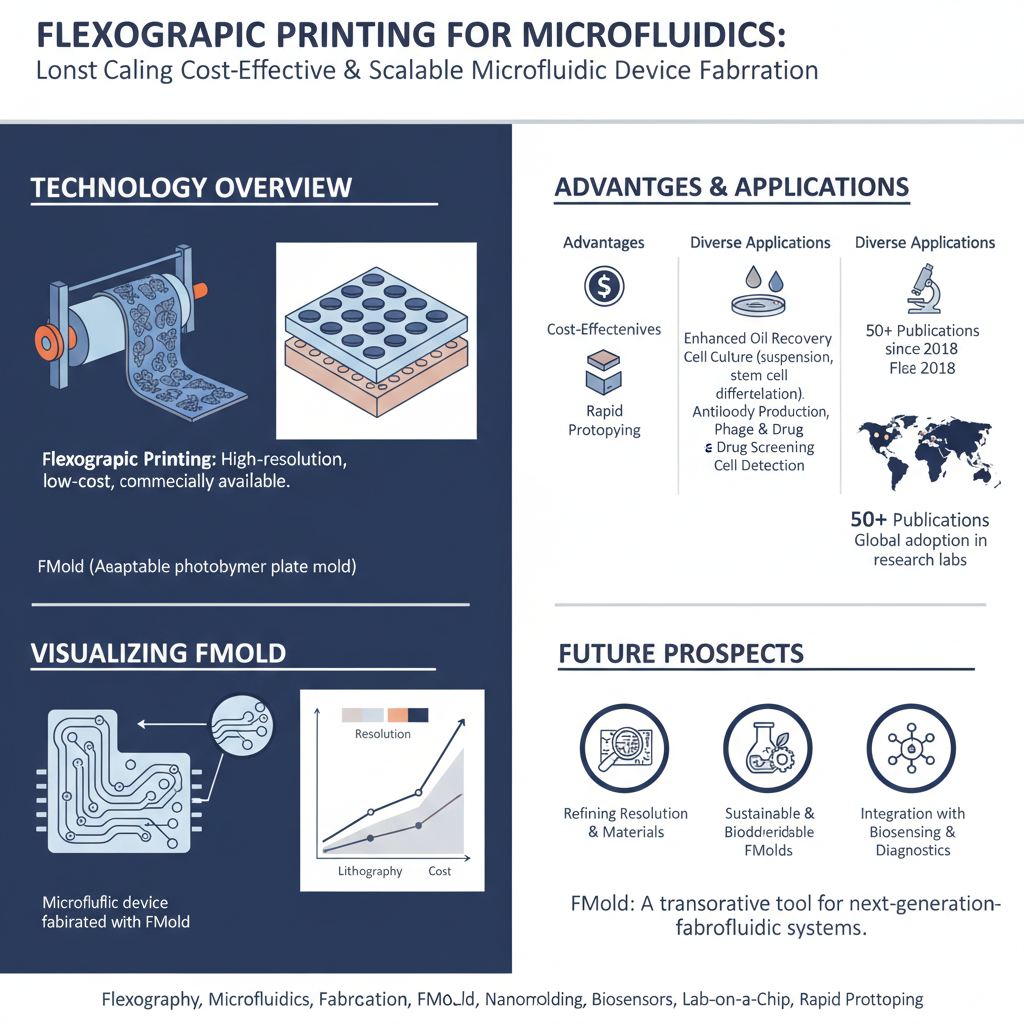
Encuentra más información en nuestro repositorio digital La impresión flexográfica, tradicionalmente utilizada en la industria del embalaje, ha surgido como una tecnología prometedora para la fabricación de dispositivos microfluídicos debido a que permite una alta resolución y está disponible comercialmente a un bajo costo en comparación con las técnicas convencionales. Esta revisión explora la adaptación de un molde de placa de impresión flexográfica de fotopolímero (FMold) para microfluídica, examinando sus ventajas, desafíos y aplicaciones. Ofrece una visión de vanguardia de la aplicación de FMold para sistemas microfluídicos, que ofrece una oportunidad única en términos de rentabilidad, escalabilidad y prototipado rápido. Las aplicaciones son diversas: FMold ha permitido la fabricación de dispositivos microfluídicos utilizados en la recuperación mejorada de petróleo para preparar modelos rock-on-a-chip, generación y almacenamiento de gotitas, cultivo celular en suspensión, producción de anticuerpos monoclonales, creación de patrones complejos de diferenciación celular, cribado fáctico, cribado farmacológico, detección celular y cultivo de células madre cancerígenas. Desde su primera aparición en 2018, FMold se ha utilizado en 50 publicaciones en diferentes laboratorios de todo el mundo. Se examinan los principales avances, las tendencias actuales de la investigación y las perspectivas futuras para ofrecer una visión global de esta herramienta en evolución. Accede al artículo completo aquí
Crononutrición y Balance Energético: Cómo el Tiempo de las Comidas y los Ritmos Circadianos Modelan la Regulación del Peso y la Salud Metabólica
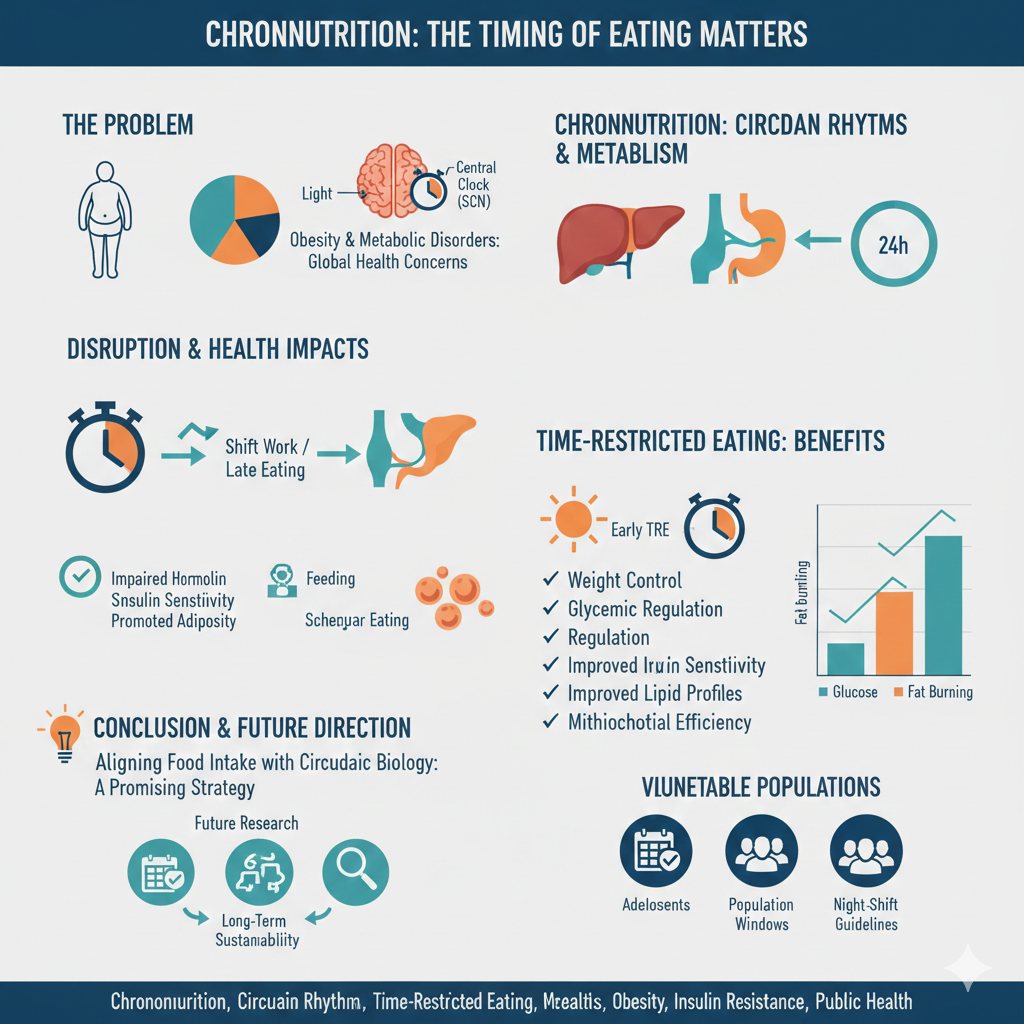
Encuentra más información en nuestro repositorio digital La obesidad y los trastornos metabólicos siguen siendo importantes problemas de salud mundial, atribuidos tradicionalmente a una ingesta calórica excesiva y a una mala calidad de la dieta. Estudios recientes destacan que el momento de las comidas juega un papel crucial en la determinación de la salud metabólica. Esta revisión explora la crononutrición, un campo creciente que examina cómo los patrones de ingesta alimentaria interactúan con los ritmos circadianos endógenos para influir en el equilibrio energético, el metabolismo de la glucosa y los lípidos y el riesgo cardiometabólico. El sistema circadiano, que incluye un reloj central en el núcleo suprachiasmático y relojes periféricos en los tejidos metabólicos, regula las funciones fisiológicas en un ciclo de 24 horas. Mientras que la luz atrapa el reloj central, los horarios de alimentación actúan como sincronizadores clave para los relojes periféricos. Interrumpir esta alineación -común en los estilos de vida modernos que implican trabajo por turnos o comer hasta tarde- puede alterar los ritmos hormonales, reducir la sensibilidad a la insulina y promover la adiposidad. La evidencia de los estudios clínicos y preclínicos sugiere que comer temprano con tiempo limitado, donde la ingesta de alimentos se limita a la mañana o al principio de la tarde, ofrece beneficios significativos para el control del peso, la regulación glucémica, los perfiles lipídicos y la eficiencia mitocondrial, incluso en ausencia de restricción calórica. Estos efectos son particularmente relevantes para las poblaciones vulnerables a la perturbación circadiana, como los adolescentes, los adultos mayores y los trabajadores en turnos nocturnos. En conclusión, alinear la ingesta de alimentos con la biología circadiana representa una estrategia prometedora, de bajo costo y modificable para mejorar los resultados metabólicos. La integración de la crononutrición en las estrategias clínicas y de salud pública puede mejorar la adherencia a la dieta y la eficacia del tratamiento. Se necesitan futuros estudios a gran escala para definir las ventanas de alimentación óptima, evaluar la sostenibilidad a largo plazo y establecer directrices crononutritivas específicas para cada población. Accede al artículo completo aquí
Impacto biológico de PET True-to-Life y titanio-dopado PET Nanoplastics en células de monocitos derivados humanos (THP-1)
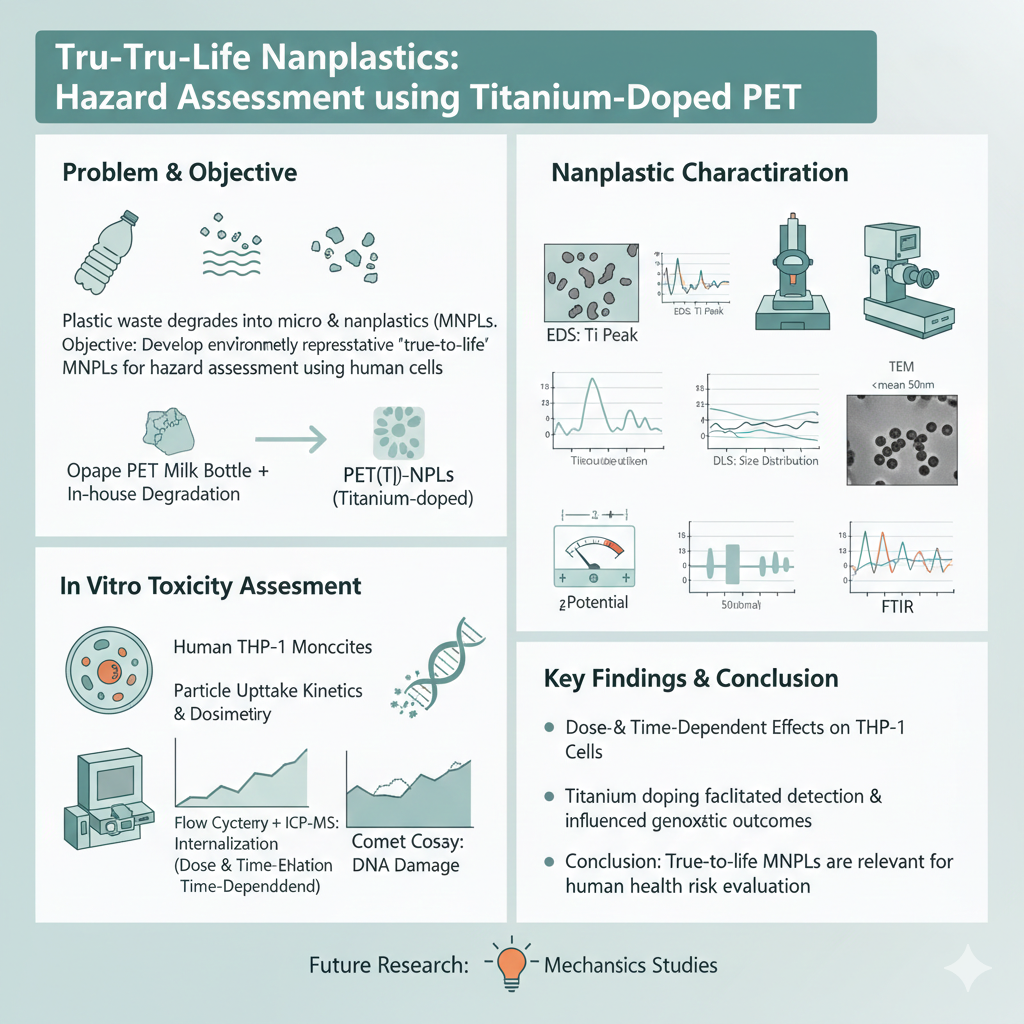
Encuentra más información en nuestro repositorio digital En el medio ambiente, los residuos plásticos se degradan en pequeñas partículas conocidas como microplásticos y nanoplásticos (MNPLs), dependiendo de su tamaño. Habida cuenta de los posibles efectos nocivos asociados con la exposición a los MNPL, es fundamental elaborar partículas representativas del medio ambiente para la evaluación de los peligros. Estos llamados MNPLs realistas se generan a través de la degradación interna de productos plásticos del mundo real. En este estudio, produjimos nanoplásticos dopados con titanio (NPL) a partir de botellas de leche opacas de polietileno tereftalato (PET), que contienen dióxido de titanio como relleno. Los PET(Ti)-NPLs resultantes se caracterizaron a fondo utilizando microscopia electrónica de barrido (SEM), espectroscopia de rayos X dispersiva en energía (EDS), espectrometría de masas (MS), dispersión luminosa dinámica (DLS), mediciones del potencial ζ, microscopia electrónica de transmisión (TEM) e infrarrojo de transformación de Fourier (FTIR) espectroscopia. Se emplearon monocitos THP-1 de origen humano para investigar la cinética de captación de partículas, la dosimetría y la genotoxicidad. Una combinación de citometría de flujo y espectrometría de masas de plasma acoplado inductivamente (ICP-MS) permitió la cuantificación de partículas internalizadas, mientras que el ensayo del cometa evaluó el daño al ADN. Los resultados revelaron efectos dependientes de la dosis y del tiempo de PET(Ti)-NPLs sobre las células THP-1, particularmente en términos de internalización. El dopaje de titanio facilitó la detección e influyó en los resultados genotóxicos. Este estudio demuestra la pertinencia de utilizar modelos nanoplásticos representativos del medio ambiente para evaluar los riesgos para la salud humana y subraya la importancia de proseguir las investigaciones sobre mecanismos. Accede al artículo completo aquí