

Mejora de las propiedades mecánicas en el etileno propileno dieno monómero/caucho natural nanocomposites a través de Ti3C2TX refuerzo y EPDM-g-MAH compatibilización
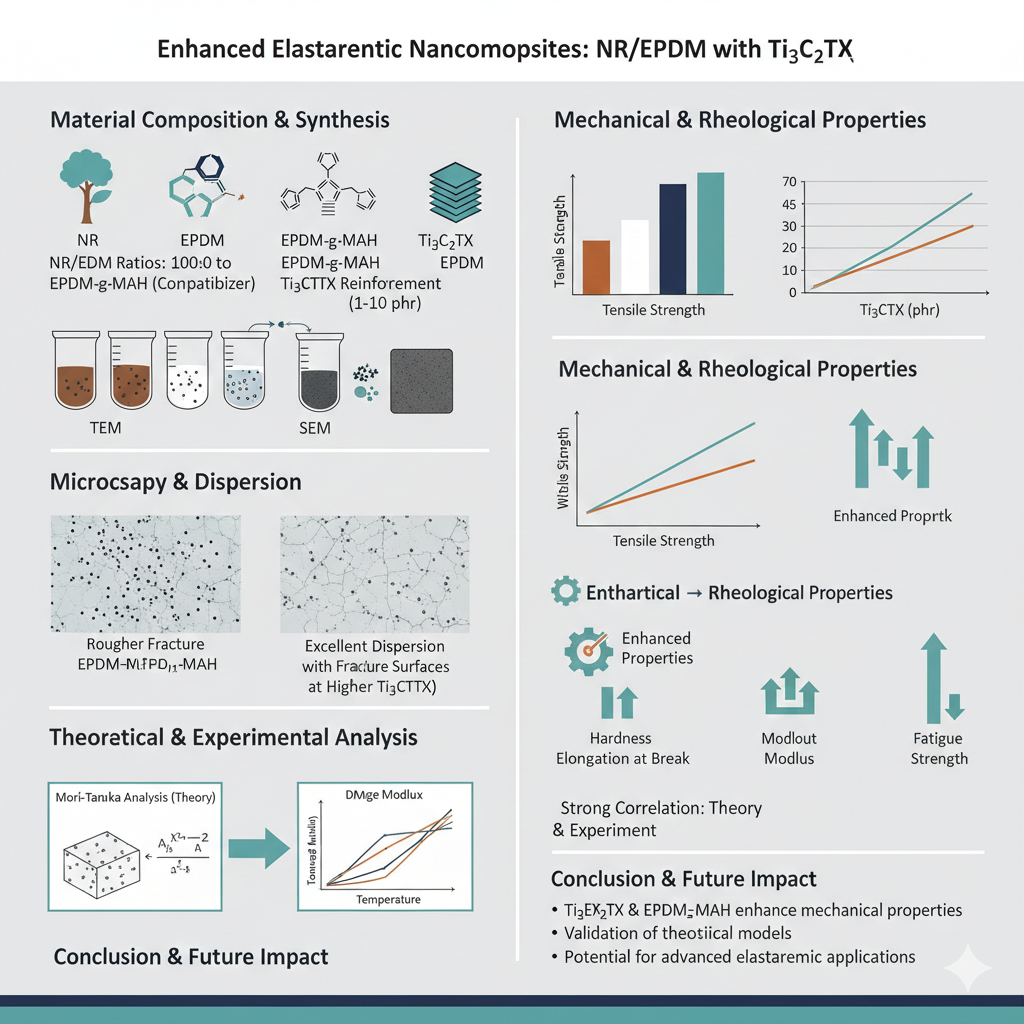
Encuentra más información en nuestro repositorio digital Esta investigación explora nanocompuestos elastoméricos que consisten en etileno propileno dieno monómero de caucho/ caucho natural (NR/EPDM) en varias proporciones (100:0, 80:20, 60:40, 40:60, 20:80 y 0:100 phr). El estudio incorpora anhídrido maleico injertado EPDM (EPDM-g-MAH) como compatibilizador, junto con diferentes cantidades de refuerzo Ti3C2TX (1, 3, 5, 7 y 10 phr). Para evaluar la dispersión y morfología del refuerzo de Ti C TX en la matriz NR/EPDM, este estudio utilizó microscopia electrónica de transmisión (TEM) y microscopia electrónica de barrido (SEM). Estos análisis revelaron que, en presencia de EPDM-g-MAH, mayores concentraciones de Ti3C2TX condujeron a superficies de fractura más ásperas en las muestras, lo que indica la excelente dispersión de Ti3C2TX en la matriz NR/EPDM. La investigación de las propiedades mecánicas y reológicas demostró mejoras significativas con el aumento de la concentración de Ti3C2TX en conjunción con EPDM-g-MAH. El estudio exploró además las relaciones entre la morfología de los nanocomposites y sus propiedades mecánicas teóricas y experimentales a través del análisis de Mori-Tanaka y el análisis térmico mecánico dinámico (DMTA), respectivamente. Estos análisis revelaron una fuerte correlación entre la teoría y la experimentación. El comportamiento mecánico de los compuestos mostró notables mejoras en la resistencia a la tracción, dureza, módulo, elongación por rotura y resistencia a la fatiga con la adición de Ti3C2TX, particularmente en presencia de EPDM-g-MAH. Finalmente, nuestros hallazgos destacan la compatibilidad entre los análisis teóricos y los resultados experimentales, validando la eficacia de la incorporación de Ti3C2TX en mejorar las propiedades de nanocomposites. Accede al artículo completo aquí
La carga de los eventos cardiovasculares según el perfil de riesgo cardiovascular en adultos de países de ingresos altos, medios y bajos (PURE): estudio de cohortes
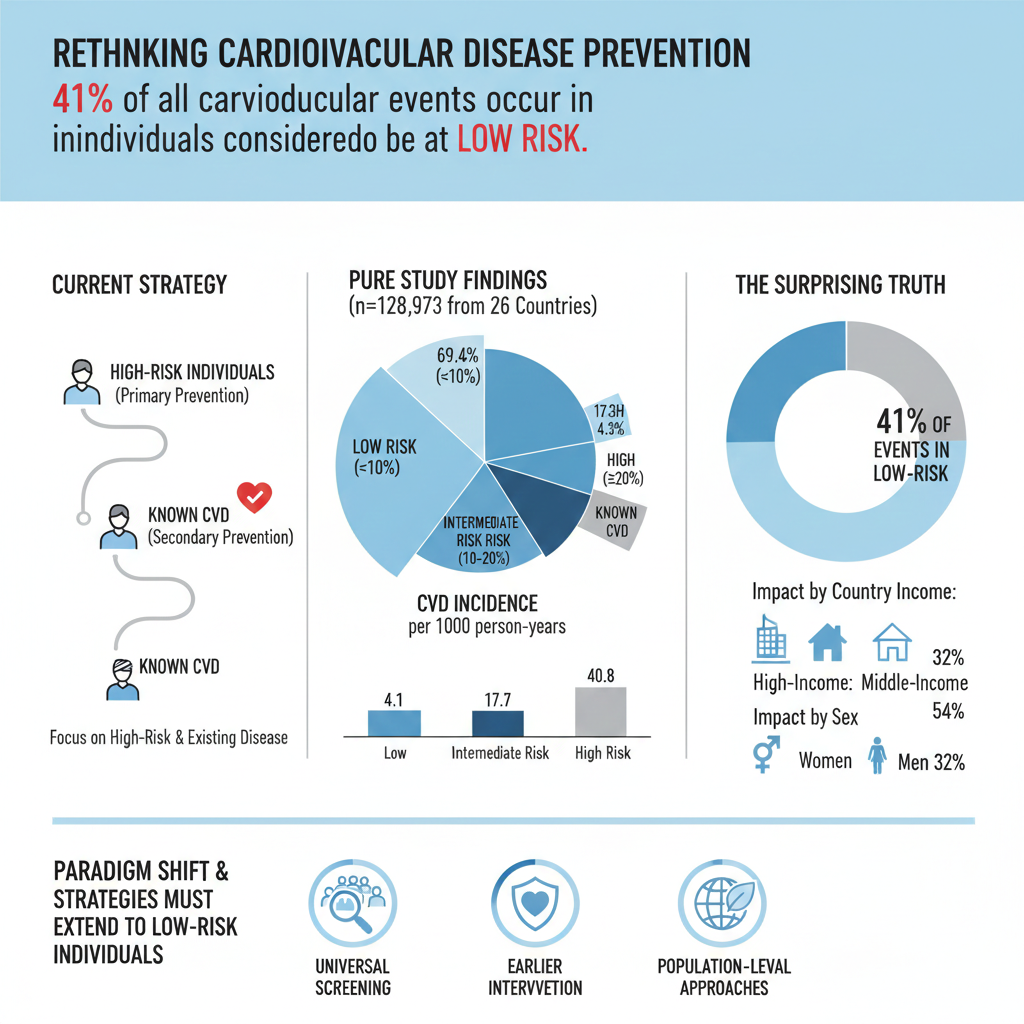
Encuentra más información en nuestro repositorio digital Antecedentes: Las estrategias actuales para prevenir los resultados cardiovasculares adversos se centran en la prevención primaria en grupos de alto riesgo y en la prevención secundaria en personas con enfermedades cardiovasculares conocidas. Nuestro objetivo fue determinar la proporción de eventos que ocurren en grupos de bajo riesgo a nivel mundial. Métodos: Se incluyó a personas de 40 años a menos de 75 años que participaron en el estudio de Epidemiología Rural Urbana Prospectiva (PURE), que es un estudio de cohorte basado en la población que comenzó a reclutar adultos de hogares seleccionados para ser ampliamente representativos de la composición sociodemográfica de sus comunidades. Hemos documentado prospectivamente infarto de miocardio fatal o no fatal, accidente cerebrovascular, insuficiencia cardíaca o cualquier otro evento cardiovascular mortal estratificado por historia de enfermedad cardiovascular y por las puntuaciones de riesgo de enfermedad predichas a 10 años basadas en tablas de riesgos de laboratorio de la OMS 2019 (<10% [bajo], 10% a <20% [intermedio] y 20% [alto]) en personas sin enfermedad cardiovascular previa de 26 países de ingresos altos, medios y bajos. Se estandarizaron las tasas de eventos de resultado para la distribución por edad y sexo de la cohorte. Resultados: Entre el 11 de julio de 2000 y el 6 de mayo de 2019, se incluyeron 128.973 participantes de 26 países (edad media 53 6 años [SD 8 2]; 75.858 [58 8%] eran mujeres y 53 115 [41 2%] eran hombres). Se observaron 11.483 eventos de desenlace que afectaron a un 8 9% de la cohorte durante una mediana de seguimiento de 12 3 años (IQR 9 8-14 6). Entre los participantes, 89.508 (69,4%) tenían un bajo riesgo de enfermedad cardiovascular, 22.363 (17,3%) tenían un riesgo intermedio de enfermedad cardiovascular y 5.529 (4,3%) tenían un alto riesgo de enfermedad cardiovascular, mientras que 11.573 (9,0%) tenían enfermedades cardiovasculares conocidas. Las tasas de incidencia de enfermedades cardiovasculares estandarizadas por edad y sexo por 1000 personas-año fueron de 4 1 (95% IC 4 0-4 2) en el grupo de bajo riesgo, 17 7 (15 2-20 2) en el grupo de riesgo intermedio y 40 8 (25 1 56 4) en el grupo de alto riesgo. En general, el 41% de los acontecimientos se produjeron en participantes con enfermedades cardiovasculares no diagnosticadas y bajo riesgo. La proporción de resultados cardiovasculares adversos que se producen en este grupo de bajo riesgo estaba inversamente relacionada con el nivel de ingresos del país (32% en los países de altos ingresos, 38% en los de medianos ingresos y 54% en los de bajos ingresos) y era mayor en las mujeres (51%) que en los hombres (32%). Interpretación: Para lograr una reducción sustancial de las enfermedades cardiovasculares a nivel poblacional, es necesario un cambio fundamental, de modo que las estrategias preventivas para las enfermedades cardiovasculares se extiendan más allá de aquellos con riesgo alto o incluso intermedio previsto para incluir los considerados de bajo riesgo. Financiación: los organismos de financiación se enumeran en el apéndice (p29.). Accede al artículo completo aquí
Exploración de la eficiencia y escalabilidad del uso de algas como materia prima de biomasa para la producción de biocombustibles
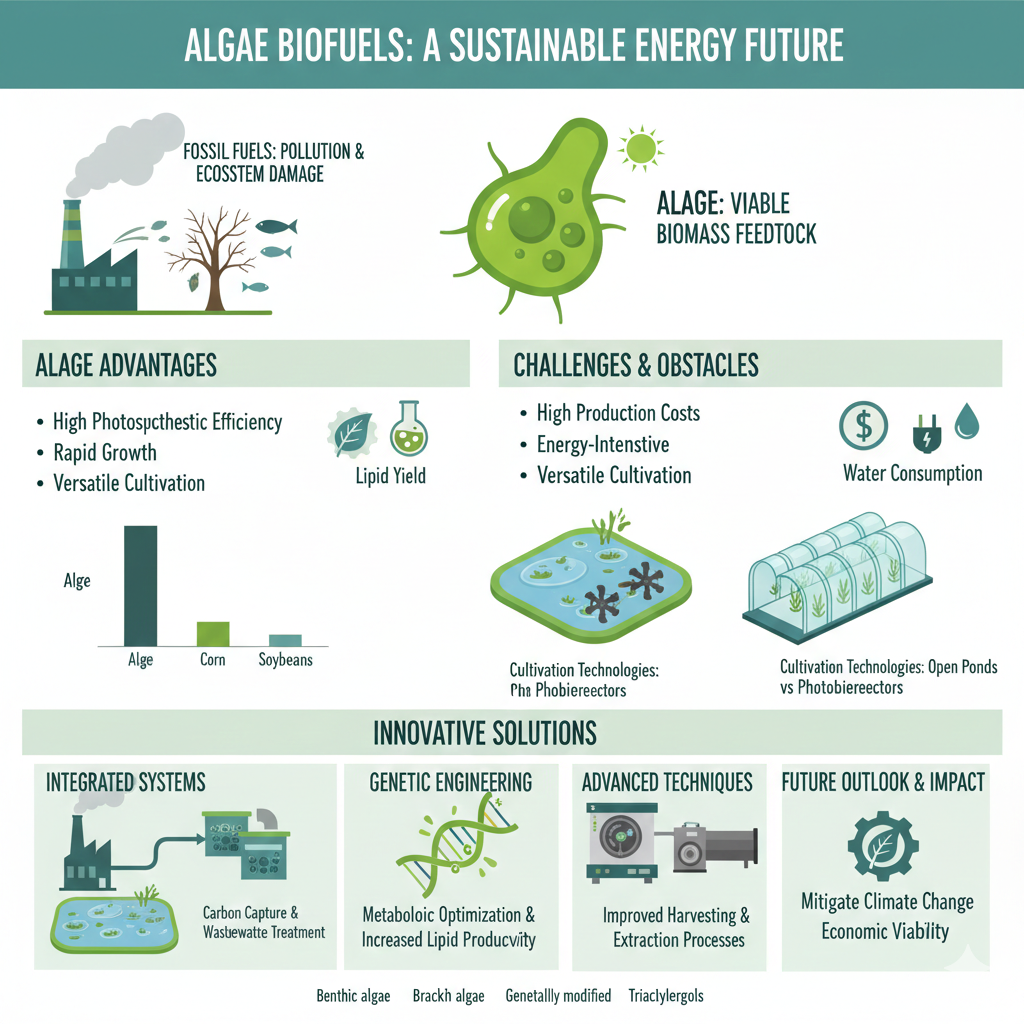
Encuentra más información en nuestro repositorio digital La sostenibilidad es fundamental para preservar los recursos esenciales para las generaciones futuras. El uso generalizado de combustibles fósiles genera una contaminación importante, que afecta gravemente a los ecosistemas terrestres y acuáticos por medio de fenómenos como la lluvia ácida. A pesar de su rápido crecimiento, alta eficiencia fotosintética y capacidad para prosperar en una variedad de condiciones, las algas se han convertido en una materia prima alternativa viable de biomasa para la producción de biocombustibles. Esta revisión explora la eficiencia y la escalabilidad de los biocombustibles a base de algas, centrándose en factores clave como el rendimiento de la biomasa, el contenido de lípidos y las tecnologías de conversión. Las algas tienen un mayor rendimiento lipídico en comparación con los biocombustibles tradicionales como el maíz o la soja, lo que las convierte en una opción atractiva para la producción de combustible a gran escala. Sin embargo, varios obstáculos dificultan la adopción generalizada de los biocombustibles a base de algas, incluidos los altos costos de producción, el cultivo intensivo en energía y el consumo de agua. En este documento también se examina la eficiencia y la idoneidad de diversas tecnologías de cultivo, incluidos los estanques abiertos y los fotobiorreactores, para la producción a gran escala. La producción de biocombustibles a partir de algas podría hacerse más viable desde el punto de vista económico y ecológicamente sostenible mediante la integración de la tecnología de captura de carbono y el tratamiento de las aguas residuales. Los avances en ingeniería genética y optimización metabólica están aumentando aún más la productividad de los lípidos, ofreciendo perspectivas prometedoras para aplicaciones a gran escala. Este estudio ofrece además un análisis de las técnicas de ingeniería genética destinadas a aumentar el rendimiento de los biocombustibles. El estudio hace hincapié en el potencial de los biocombustibles a base de algas para servir como alternativas respetuosas con el medio ambiente a los combustibles fósiles tradicionales, destacando estos enfoques innovadores. Si bien la evaluación reconoce que los biocombustibles basados en algas pueden reducir la dependencia de los combustibles fósiles y ayudar a mitigar el cambio climático, también señala que es necesario realizar más investigación y desarrollo para superar los actuales desafíos financieros y tecnológicos. Esta revisión explora los recientes avances en el cultivo de algas, las técnicas de recolección y los procesos de extracción de biocombustibles. Su objetivo es presentar una comprensión global del estado actual de las algas como materia prima sostenible y eficaz para la producción de biocombustibles, junto con perspectivas futuras. Accede al artículo completo aquí
Next-Generation sequencing in a Native American patient with sea-blue histiocytosis: A case report and genomic analysis; Secuenciación de Nueva Generación en un paciente Nativo Americano con histiocitos azul marino: Reporte de caso y análisis genómico
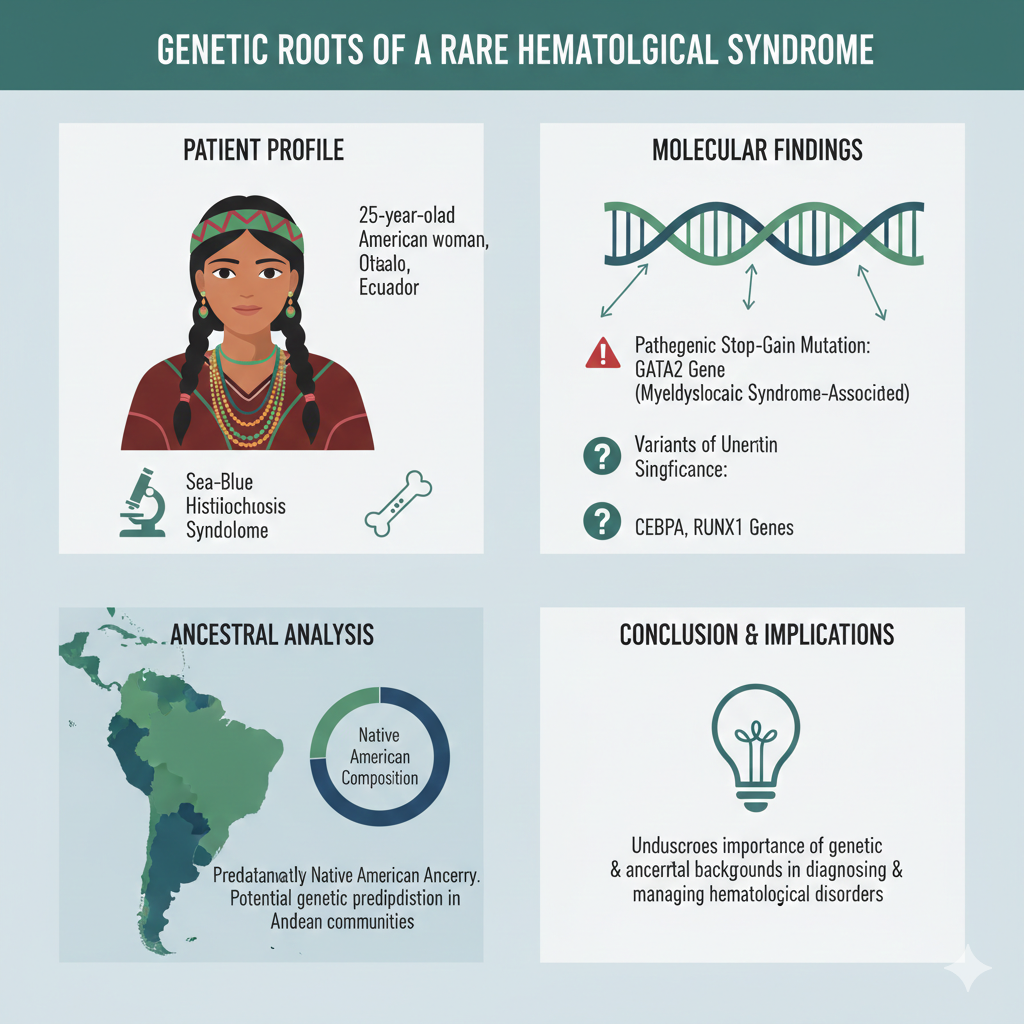
Encuentra más información en nuestro repositorio digital Este estudio presenta el caso de una mujer nativa americana de 25 años, de Otavalo, Ecuador, diagnosticada con histiocitosis azul marino y síndrome mielodisplásico. La aspiración de la médula o sea reveló histiocitos azul marino, y la secuenciación de próxima generación identificó una probable mutación patógena stop-gain en el gen, asociada con síndrome mielodisplásico. Además, se encontraron variantes de importancia incierta en los genes y. El análisis ancestral mostró una composición predominantemente indígena, lo que sugiere una posible predisposición genética específica de las comunidades andinas. El informe subraya la importancia de comprender los antecedentes genéticos y ancestrales en el diagnóstico y manejo de trastornos hematológicos. Accede al artículo completo aquí
El impacto positivo del Life’s Essential 8 en la prevención de la insuficiencia cardíaca incidente
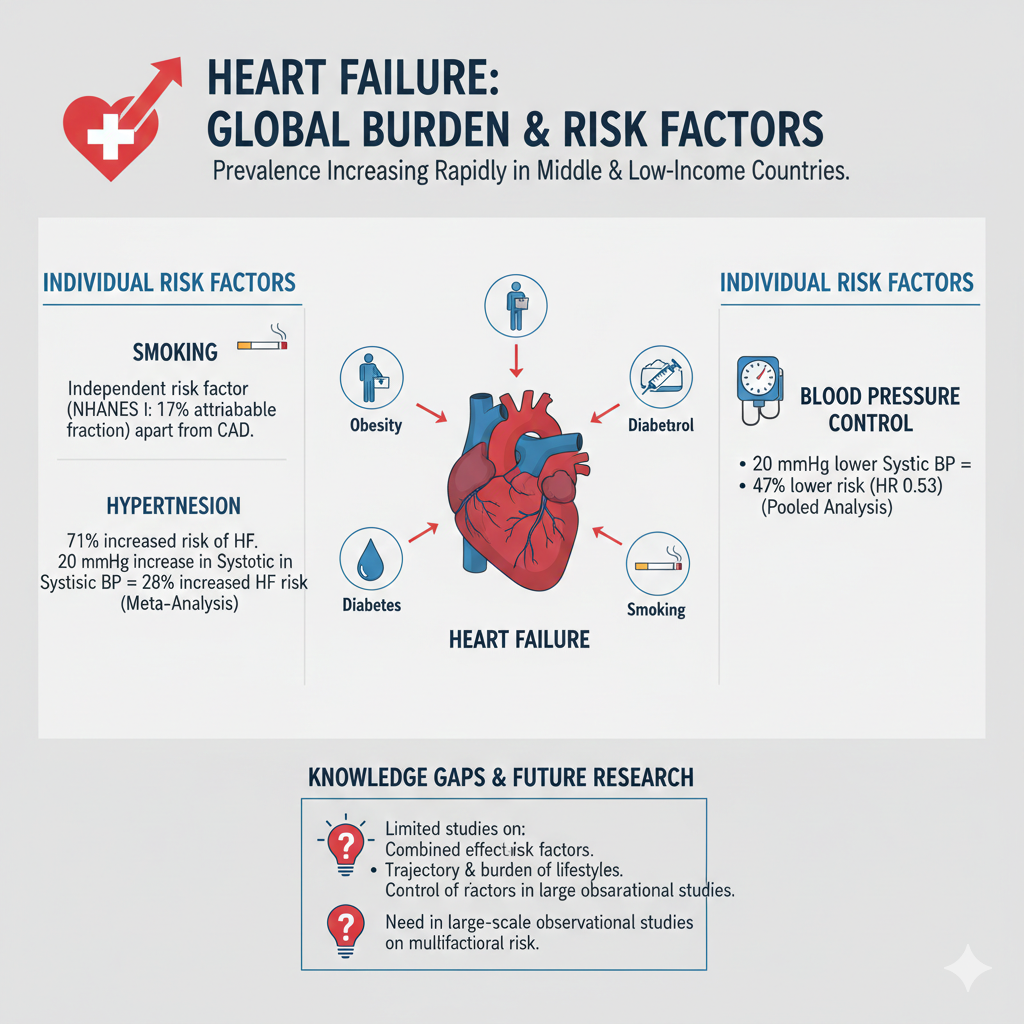
Encuentra más información en nuestro repositorio digital La prevalencia de la insuficiencia cardíaca (IC) está aumentando rápidamente, especialmente en los países de ingresos medios y bajos, lo que contribuye a los considerables costos del tratamiento y debilita sus sistemas de salud.1 Individualmente, los factores de riesgo cardiovascular están asociados con un mayor riesgo de desarrollar IC. Por ejemplo, el estudio NHANES I informó que el tabaquismo es un factor de riesgo independiente para la IC incidente, aparte de la enfermedad coronaria (fracción atribuible a la población = 17%). 2 Un metanálisis reciente mostró que la hipertensión está asociada con un aumento del 71% en el riesgo de IC y que un aumento de 20 mmHg en la presión arterial sistólica está asociado con un aumento del 28% en el riesgo de IC.3 Similarmente, un análisis combinado de 61 estudios prospectivos sobre la presión arterial y la mortalidad por IC informó una razón de riesgo (HR) de 0,53 [intervalo de confianza (IC) del 95%: 0,48-0,59], para una presión sanguínea sistólica inferior a 20 mmHg4 Sin embargo, pocos estudios han examinado la combinación y el efecto de la trayectoria, la carga de los estilos de vida y el control de los factores de riesgo en grandes estudios observacionales. Accede al artículo completo aquí
Uso de harina de palma de durazno en la formulción de una pasta de papaya; Utilización de Farimha en fórmula de pasta de mamá
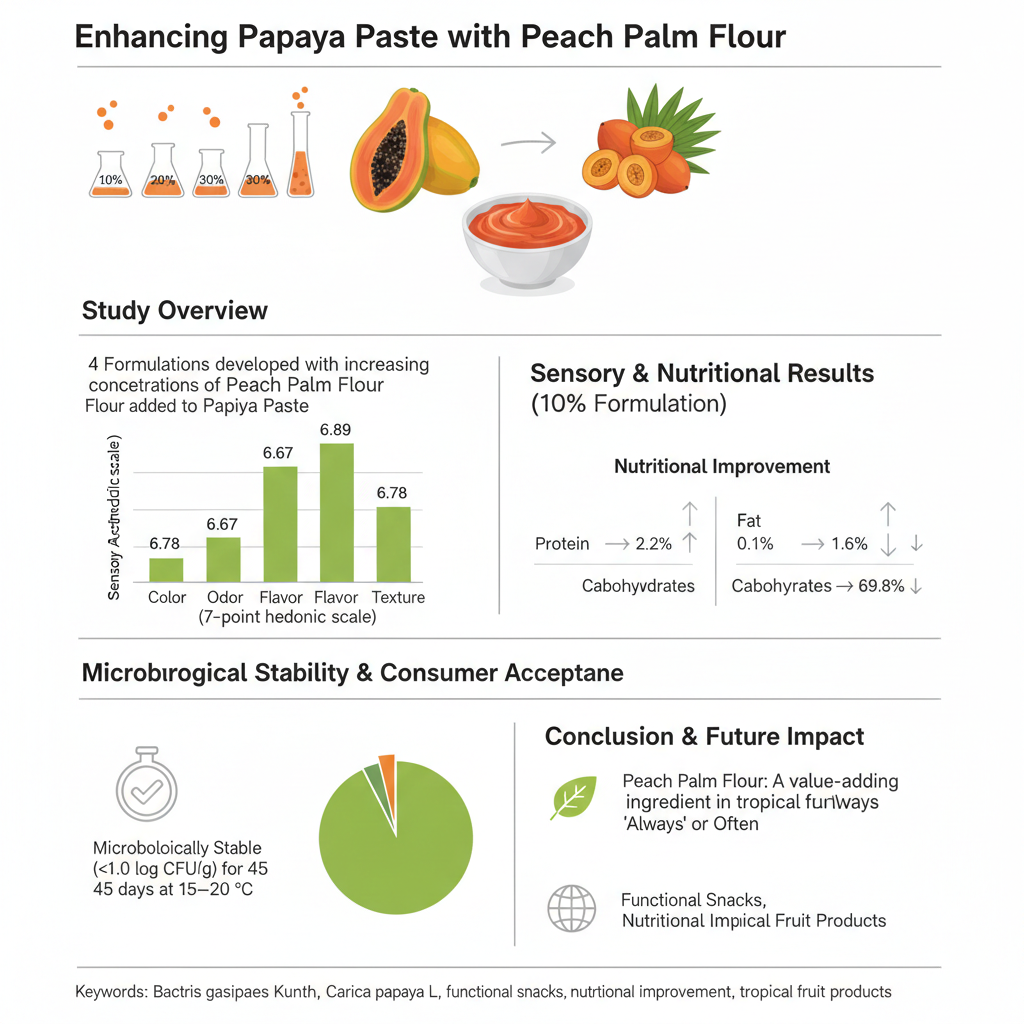
Encuentra más información en nuestro repositorio digital La incorporación de ingredientes funcionales en alimentos procesados representa una estrategia prometedora para mejorar sus perfiles nutricionales y sensoriales. Este estudio evaluó el efecto de la adición de harina de palma de melocotón (Bactris gasipaes Kunth) sobre las características fisicoquímicas, funcionales, microbiológicas y sensoriales de una pasta de papaya (Carica papaya L.). Se desarrollaron cuatro formulaciones con concentraciones crecientes de harina de palma de melocotón (10, 20, 30 y 40% p/p). a formulación al 10% mostró la mayor aceptación sensorial, con puntuaciones medias de 6,78 para color, 6,67 para olor, 6,89 para sabor y 6,78 para textura (escala hedónica de 7 puntos). Esta formulación también mostró un aumento significativo en el contenido de proteínas (del 0,3% al 2,2%) y grasa (del 0,1% al 1,6%), junto con una reducción en el contenido de carbohidratos (del 72,6% al 69,8%), en comparación con el control, sin comprometer la percepción sensorial. El producto permaneció microbiológicamente estable (<1,0 log UFC/g para las bacterias mesófilas aeróbicas y los mohos/levaduras) durante 45 días a 15-20 °C. Un total de 87% de los consumidores informaron que consumirían el producto «siempre» o «con frecuencia», confirmando su aceptabilidad. Estos hallazgos apoyan el uso de la harina de palma de melocotón como un ingrediente con valor agregado en productos funcionales a base de frutas tropicales. Palabras clave: Bactris gasipaes Kunth; Carica papaya L.; snacks funcionales; mejora nutricional; productos de frutas tropicales. Accede al artículo completo aquí