

Espironolactona versus placebo en pacientes sometidos a diálisis de mantenimiento (ACHIEVE): ensayo internacional, grupo paralelo, aleatorizado y controlado
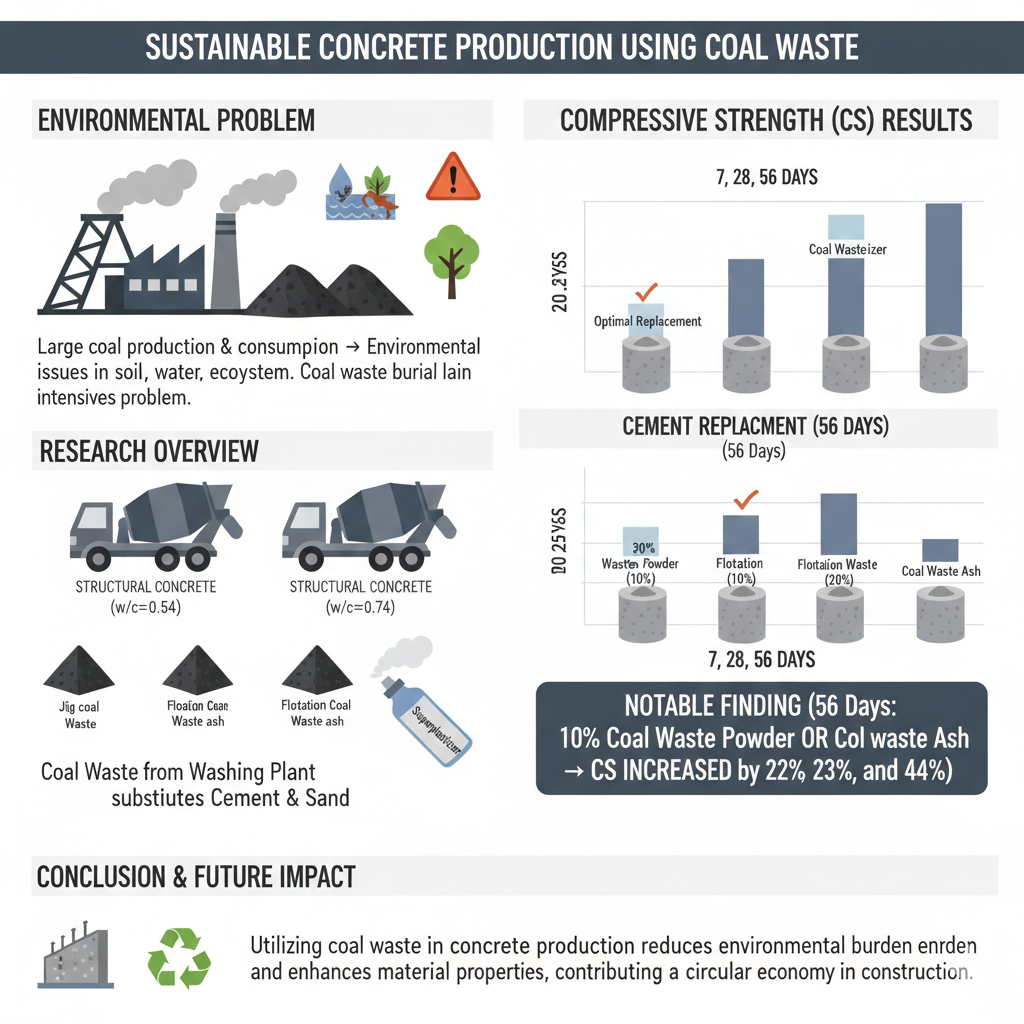
Encuentra más información en nuestro repositorio digital La gran producción y consumo de carbón ha causado problemas ambientales en todo el mundo como fuente de producción de energía con efectos irreparables sobre el suelo, el agua y el ecosistema. Además, la producción de residuos de carbón en las plantas de lavado del carbón y su enterramiento intensifica el problema en la naturaleza. Debido a la creciente generación de residuos de carbón procedentes de diversas fuentes, este estudio utilizó varias formas de residuos de carbón obtenidos en una planta de lavado de carbón para la producción tanto de hormigón estructural (con una relación agua-cemento de 0,54) como de hormigón no estructural (con una relación agua-cemento de 0,7). El impacto de los residuos de carbón sobre la resistencia a la compresión (CS) se examinó a edades de curado de 7, 28 y 56 días. Se sustituyeron el cemento y la arena por diversos porcentajes de residuos de carbón. Se incorporó un superplastificante en las mezclas de hormigón para mejorar la trabajabilidad y lograr los niveles deseados de caída y resistencia. Según los resultados de la resistencia a la compresión, el nivel ideal de sustitución de arena con residuos de carbón vegetal era del 30 %. Para muestras de 56 días de edad, las tasas óptimas de sustitución de cemento con polvo de residuos de carbón vegetal, residuos de carbón de flotación y cenizas de residuos de carbón fueron del 10 %, 10 % y 20 %, respectivamente. En particular, la adición del 10 % de polvo y cenizas de residuos de carbón aumentó la resistencia a la compresión en un 22 %, 23 % y 44 % a los 56 días. Accede al artículo completo aquí
Optical characterization of NiO nanoparticle-decorated single-walled carbon nanotubes synthesized via ultrasonic-assisted sol-gel method
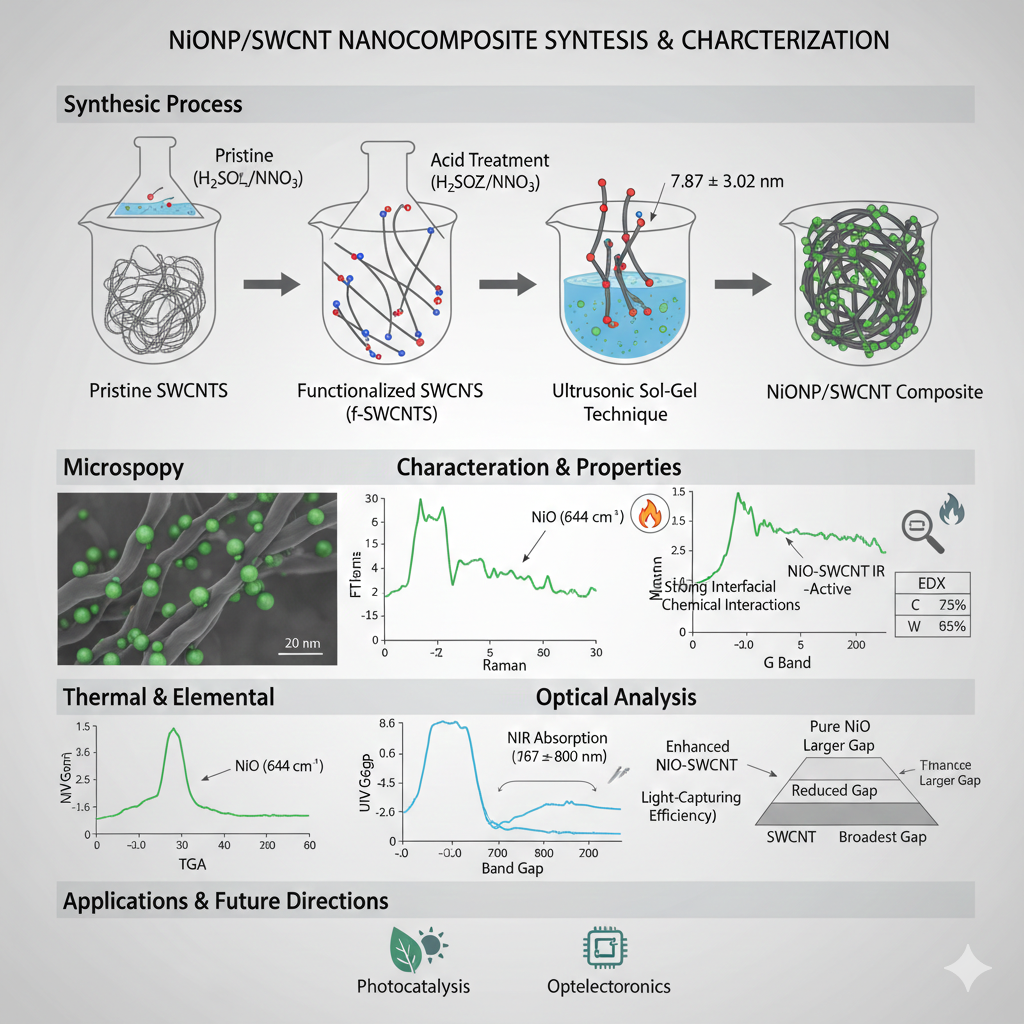
Encuentra más información en nuestro repositorio digital The decoration of carbon nanotubes with metal oxide nanoparticles has been employed to enhance their intrinsic properties and expand their applicability across various technological fields. This study investigated the functionalization of single-walled carbon nanotubes (SWCNTs) by treating them with a 3:2 mixture of sulfuric acid and nitric acid, which introduces oxygen-containing functional groups to enhance their dispersibility and reactivity. Nickel oxide nanoparticles (NiONPs) were synthesized and integrated onto the functionalized SWCNTs using an ultrasonic-assisted sol-gel technique, allowing uniform distribution. Then, the NiONP/SWCNT composite was evaluated for thermal stability and elemental composition via thermogravimetric analysis (TGA) and energy-dispersive X-ray spectroscopy. Both field emission scanning electron microscopy and high-resolution transmission electron microscopy confirmed the successful decoration of NiONPs (particle size <20 nm, mean value of 7.87 ± 3.02 nm) on the SWCNTs. Fourier-transform infrared spectroscopy revealed characteristic peaks corresponding to NiO at 644 cm−1 as IR-active modes induced by NiO–SWCNT and Raman spectroscopy further verified the chemical bonding between NiONPs and SWCNTs. This shows shifts in the radial breathing mode and G bands of SWCNTs, indicative of strong interfacial chemical interactions. Optical analysis demonstrated that the NiO-SWCNT nanocomposite exhibited a reduced band gap compared to pure NiO nanoparticles but a broader band gap than intermediate-phase SWCNT configurations. In addition, UV–Vis spectroscopy identified a prominent absorption peak within the 600–800 nm wavelength range, aligning with the near-infrared (NIR) spectral region. This enhanced NIR absorption suggests improved light-capturing efficiency, which could significantly benefit applications in photocatalysis and optoelectronics. Accede al artículo completo aquí
Navegando el peso: el impacto de la obesidad en la cirugía del cáncer gastrointestinal y las estrategias para mejorar los resultados
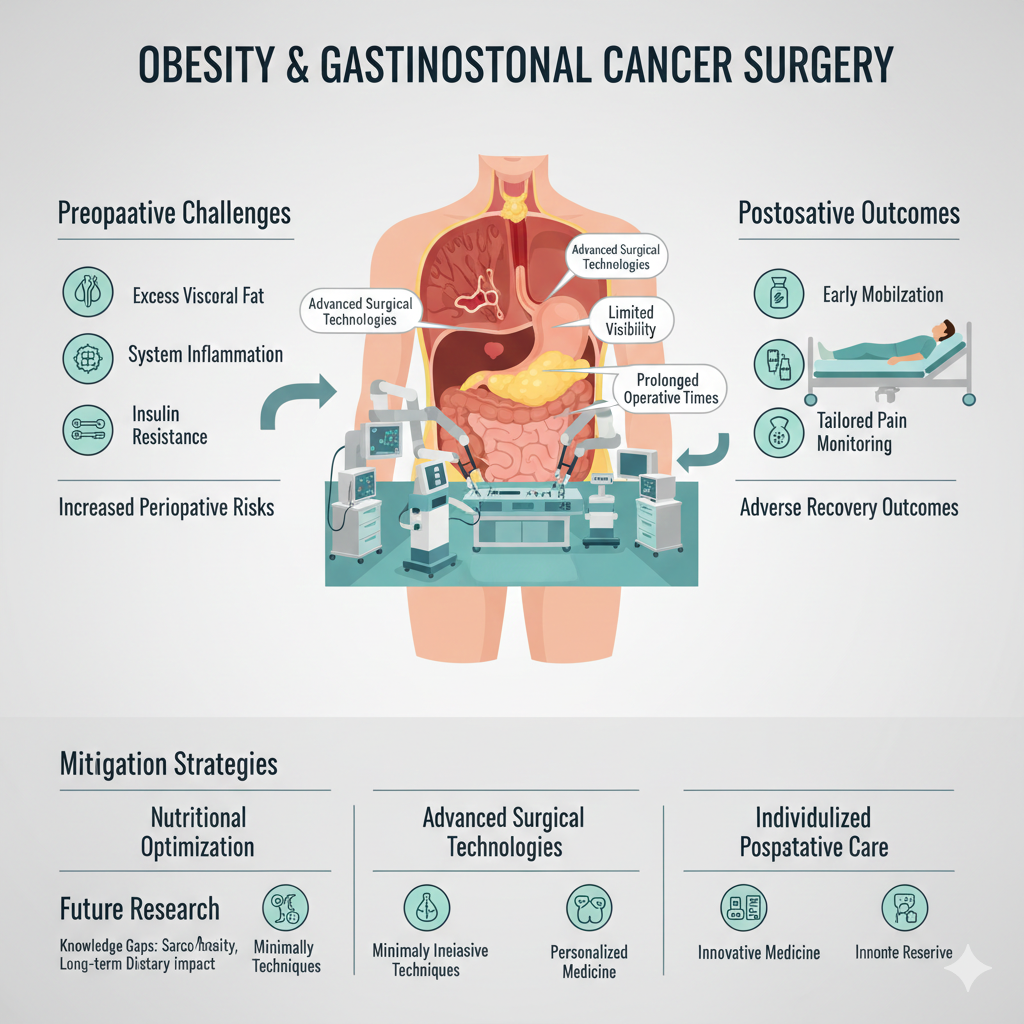
Encuentra más información en nuestro repositorio digital La obesidad afecta significativamente los resultados de la cirugía de cáncer gastrointestinal al crear desafíos complejos a lo largo de las etapas preoperatoria, intraoperatoria y postoperatoria. Esta revisión narrativa explora la intrincada relación entre obesidad y cirugía GIC, destacando la doble carga de la obesidad como un problema de salud pública global y un determinante de las complicaciones quirúrgicas. La revisión tiene como objetivo analizar los obstáculos fisiológicos y técnicos, incluyendo visibilidad limitada, tiempos de operación prolongados, mayores riesgos perioperatorios y resultados adversos de recuperación asociados con la obesidad. La evidencia enfatiza el papel crítico del exceso de grasa visceral, la inflamación sistémica y la resistencia a la insulina en elevar los riesgos quirúrgicos. Las estrategias de mitigación implican la optimización nutricional preoperatoria, el uso de tecnologías quirúrgicas avanzadas como los sistemas robotizados y laparoscópicos, y la atención posoperatoria individualizada, que abarca la movilización temprana, el manejo del dolor a medida, y un estrecho seguimiento de los parámetros metabólicos. A pesar de los avances, siguen existiendo lagunas de conocimiento, particularmente en relación con la obesidad sarcopenica y el impacto a largo plazo de las intervenciones dietéticas preoperatorias. La investigación futura debería centrarse en perfeccionar las técnicas mínimamente invasivas, integrar la medicina personalizada y explorar protocolos perioperatorios innovadores para abordar los riesgos relacionados con la obesidad de manera eficaz. Al fomentar un enfoque multidisciplinario, esta revisión subraya la necesidad de intervenciones específicas para mejorar los resultados y mejorar la calidad de la atención a pacientes con obesidad sometidos a cirugía de cáncer gastrointestinal. Accede al artículo completo aquí
Aplicación de residuos biológicos modificados con ZnCl2 para la eliminación de colorantes muy contaminados: estudio de caso de la investigación de la cinética y las isotermas de adsorción
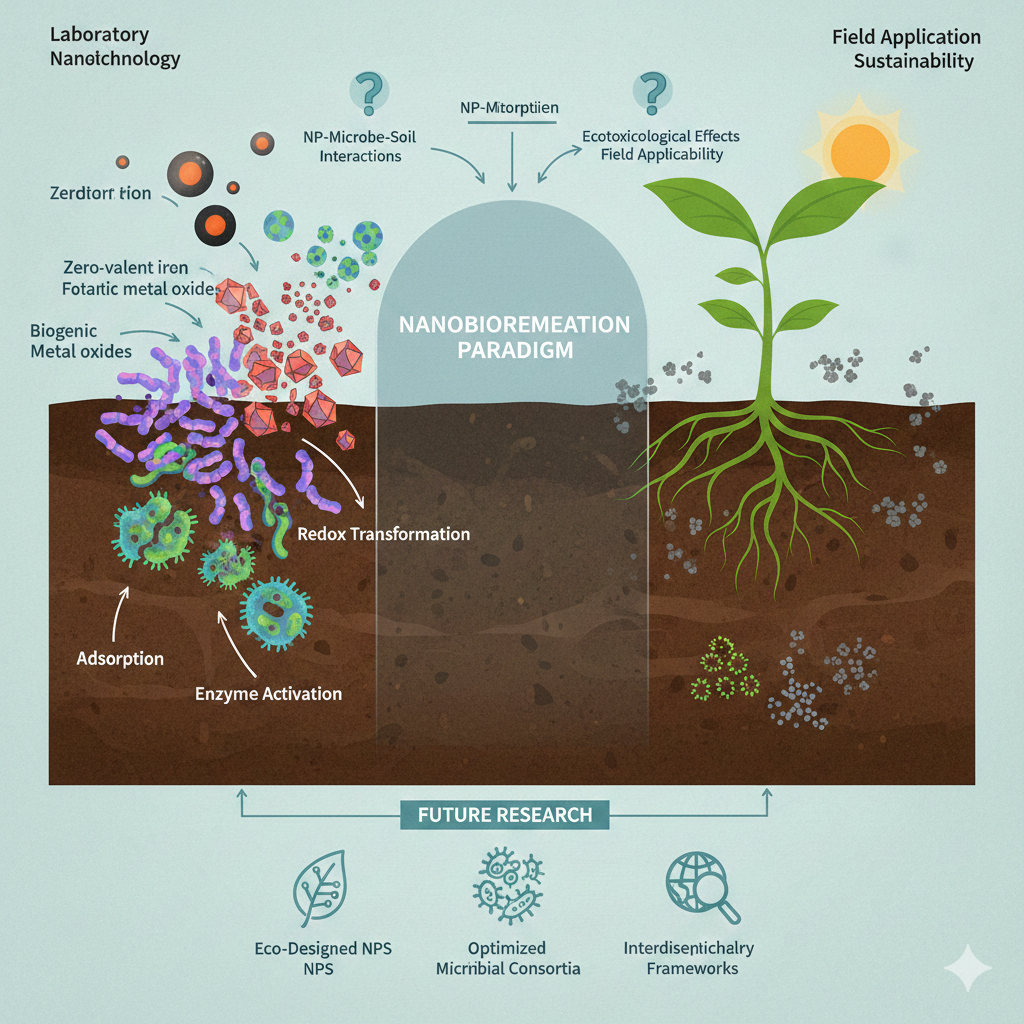
Encuentra más información en nuestro repositorio digital Los metales pesados (MH) en el suelo constituyen una gran amenaza para la sostenibilidad medioambiental y agrícola. Esta revisión discute el desarrollo del paradigma nanobioremediation (un enfoque que combina la nanotecnología y los procesos microbiológicos) para el tratamiento de la toxicidad HM. Se discuten los avances recientes en enfoques basados en nanopartículas (NP) para mejorar su capacidad de desintoxicación microbiana métodos, tales como la adsorción, transformación redox, y formas de activación enzimática de desintoxicación microbiana. Los hallazgos clave sugieren que muchos NPs diseñados (por ejemplo, hierro de valor cero, óxidos metálicos biogénicos) pueden mejorar las eficiencias de inmovilización de HM y el rendimiento microbiano del contorno y las funciones del microbioma del suelo. Aún así, hay áreas de incertidumbre respecto a las interacciones NP-microbio-suelo, los efectos ecotoxicológicos a largo plazo y la aplicabilidad a nivel de campo que son críticas para ser discutidas. Se recomienda que las futuras direcciones de investigación se centren en los NP diseñados ecológicamente, optimizando los consorcios microbianos específicos del suelo y los marcos interdisciplinarios que vinculan los métodos y materiales de laboratorio con las aplicaciones reales. Accede al artículo completo aquí