

Única anastomosis duodenoileostomia con manga gastrectomía versus manga gastrectomía sola: una revisión sistemática y meta-análisis en nombre de TROGSS-The Robotic Global Surgical Society
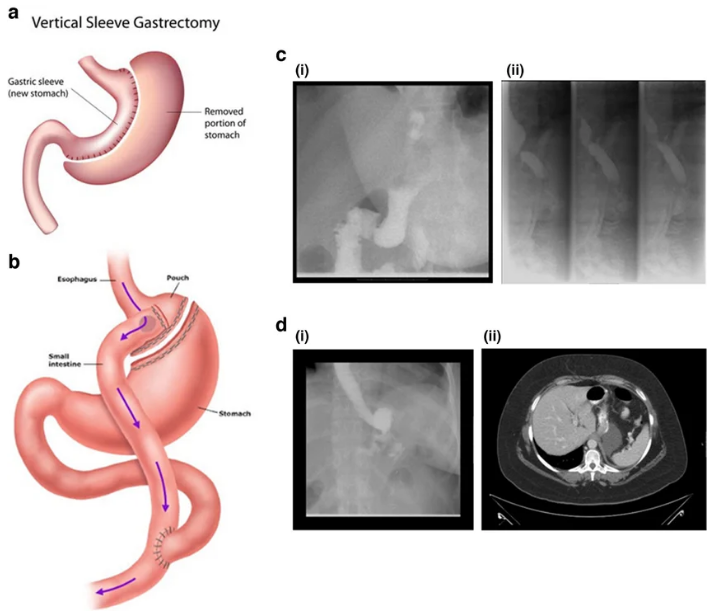
Encuentra más información en nuestro repositorio digital Antecedentes: La duodenoileostomía de una sola anastomosis con gastrectomía de manga (SADI-S) se ha descrito como un procedimiento quirúrgico seguro y eficaz. Sin embargo, estos hallazgos no se han comparado directamente con los de procedimientos más establecidos y menos complejos, como la gastrectomía de manga (SG), que sigue siendo la técnica más comúnmente realizada en cirugía metabólica y bariátrica (MBS). Objetivo: Este estudio tuvo como objetivo evaluar y contrastar los resultados intraoperatorios y postoperatorios entre pacientes sometidos a SADI-S y aquellos que se sometieron a SG. Métodos: Se realizó una revisión sistemática y un metanálisis, que se registró en PROSPERO con el número de identificación CRD42024532504. El 15 de abril de 2024 se llevó a cabo una estrategia integral de búsqueda que abarcaba PubMed, Embase, Cochrane Library, Scopus, Web of Science y Science Direct desde los primeros informes hasta marzo de 2024. La estrategia de búsqueda incorporó palabras clave relevantes, incluyendo: «SADI-S» O «Anastomosis Única Duodenal-Ileal bypass» y «Sleeve Gastrectomy». Se incluyeron estudios que compararon pacientes adultos ( 18 años) sometidos a SADI-S y SG, reportando al menos un desenlace clínico de interés. Resultados: Se incluyeron cinco estudios publicados entre 2019 y 2023, en los que participaron 3593 pacientes. De estos, 461 pacientes (12,8%) fueron sometidos a SADI-S, mientras que 3132 (87,2%) se sometieron a SG. La edad media de los pacientes fue de 42,96 años, con un 89,6% de mujeres. Los pacientes sometidos a SADI-S tenían un índice de masa corporal (IMC) significativamente más alto que aquellos sometidos a SG (promedio: 49,73 8,10 vs. 45,64 7,84; diferencia media [MD]: 3,83, IC95%: 0,52-7,14; p = 0,02) y un mayor riesgo de hipertensión (OR: 1,38, IC95%: 1,04-1,84; p = 0,03). La SADI-S también resultó en tiempos operativos más largos (125,63 51,91 min vs. 49,67 26,07 min; DM: 65,97 min, IC 95%: 61,71-70,25; p < 0,001) y Además, los pacientes que se sometieron a SADI-S mostraron un riesgo significativamente mayor de complicaciones postoperatorias, tales como readmisiones y reintervenciones (OR: 3,17; IC 95%: 2,15-4,67; p < 0,001), y experimentaron una mayor pérdida de peso excesivo (DM: 12,42%, IC 95%: 0,92-23,92; p = 0,03). No se observaron diferencias significativas entre los grupos en cuanto a edad, sexo o prevalencia de apnea obstructiva del sueño (AOS). Conclusiones: SADI-S parece ser una técnica quirúrgica prometedora para facilitar la pérdida de peso sustancial en individuos con obesidad severa. Dado el mayor riesgo de complicaciones postoperatorias asociadas con SADI-S, la evaluación cuidadosa y la toma de decisiones personalizadas para la selección y educación del paciente son esenciales para optimizar los resultados clínicos y de seguridad. Accede al artículo completo aquí
Perspectivas etnozootécnicas sobre el declive de los conocimientos tradicionales acerca de las razas locales de cabras y ovejas en la región semiárida de Paraíba, Brasil
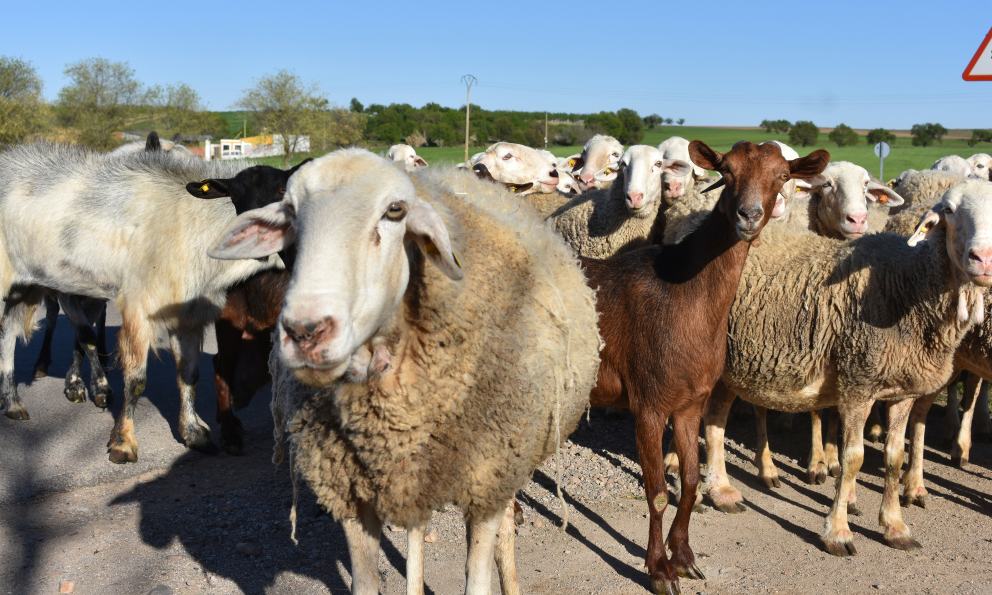
Encuentra más información en nuestro repositorio digital La conservación de las razas locales desempeña un papel estratégico en el mantenimiento de la variabilidad genética, asegurando respuestas adaptativas a los desafíos ambientales y preservando las estructuras culturales y socioeconómicas de las comunidades tradicionales. En este contexto, este estudio explora la posible desaparición de los conocimientos tradicionales sobre las razas locales desde una perspectiva etnozootécnica. Los objetivos fueron: (I) establecer el historial reproductivo de las razas/ecotipos caprinos y ovinos en la región semiárida de Paraíba; (II) estimar el índice de diversidad; y (III) evaluar los criterios de selección utilizados por las comunidades locales en cuatro territorios: Coletivo, Borborema, Folia y Casaco. El estudio tiene como objetivo apoyar programas de conservación y mejoramiento genético. La recolección de datos fue participativa, involucrando a criadores de todos los territorios. Para recuperar la historia de las razas, se aplicaron cuestionarios a los criadores más viejos, llamados «guardianes.» Se celebraron dos talleres para evaluar la diversidad de razas en el paisaje pasado (PP) y actual (PA), utilizando la técnica Recall. Las respuestas se registraron en hojas de cálculo para su análisis. Estadísticas descriptivas y correspondencia múltiple. En el caso de las razas ovinas, disminuyó ligeramente de 0,7 a 0,66. Los criadores indicaron que valoraban rasgos como la adaptabilidad, la resistencia a las enfermedades, la fertilidad y la conformación. Su fuerte conexión emocional con los animales resalta la relevancia cultural de las razas. Se encontró una fuerte conexión entre la pérdida de material genético en los territorios estudiados y la extinción del conocimiento de las comunidades locales sobre las razas locales. Accede al artículo completo aquí
El papel crucial del endocrinólogo en la enfermedad hepática esteatótica asociada a disfunciones metabólicas: una revisión exhaustiva

Encuentra más información en nuestro repositorio digital La enfermedad hepática esteatótica asociada a disfunciones metabólicas (MASLD) es un trastorno generalizado que está fuertemente asociado con afecciones metabólicas como obesidad, resistencia a la insulina y diabetes tipo 2 (DT2). La progresión de MASLD, que puede conducir a complicaciones graves como fibrosis hepática y cirrosis, está estrechamente relacionada con los riesgos cardiometabólicos, incluidas las enfermedades cardiovasculares, y con cánceres relacionados con el hígado asociados con disfunciones metabólicas. Los endocrinólogos están en una posición única para detectar MASLD temprano, particularmente en individuos con factores de riesgo metabólicos como T2D, síndrome del ovario poliquístico (SOP) y disfunción tiroidea. Si bien es posible que no realicen rutinariamente procedimientos de diagnóstico avanzados, desempeñan un papel fundamental en la identificación de pacientes en situación de riesgo y en la colaboración con especialistas para una evaluación ulterior, incluido el uso de la elastografía transitoria para evaluar la rigidez del hígado y la fibrosis. Al hacerlo, ayudan a reducir la necesidad de procedimientos invasivos. Más allá de la detección y el diagnóstico, los endocrinólogos colaboran con hepatólogos, cardiólogos y nutricionistas para asegurar un enfoque integral y multidisciplinario del tratamiento. El manejo de MASLD requiere abordar tanto las condiciones específicas del hígado como las disfunciones metabólicas más amplias a través de intervenciones de estilo de vida y terapias farmacológicas. Estudios recientes destacan los beneficios potenciales de medicamentos, como los agonistas del receptor X farnesoide (FXR) y los agonistas del receptor proliferador activado por peroxisoma (PPAR), cuando se combinan con intervenciones de estilo de vida tales como modificar la dieta y participar en más actividad física. Esta revisión destaca el papel fundamental de los endocrinólogos en la gestión del MASLD, centrándose en sus contribuciones al cribado, diagnóstico y atención integrada. Examina la compleja interacción entre la regulación hormonal y las estrategias de tratamiento farmacológico y no farmacológico, proporcionando ideas para mejorar la práctica clínica Accede al artículo completo aquí