
Encuentra más información en nuestro repositorio digital
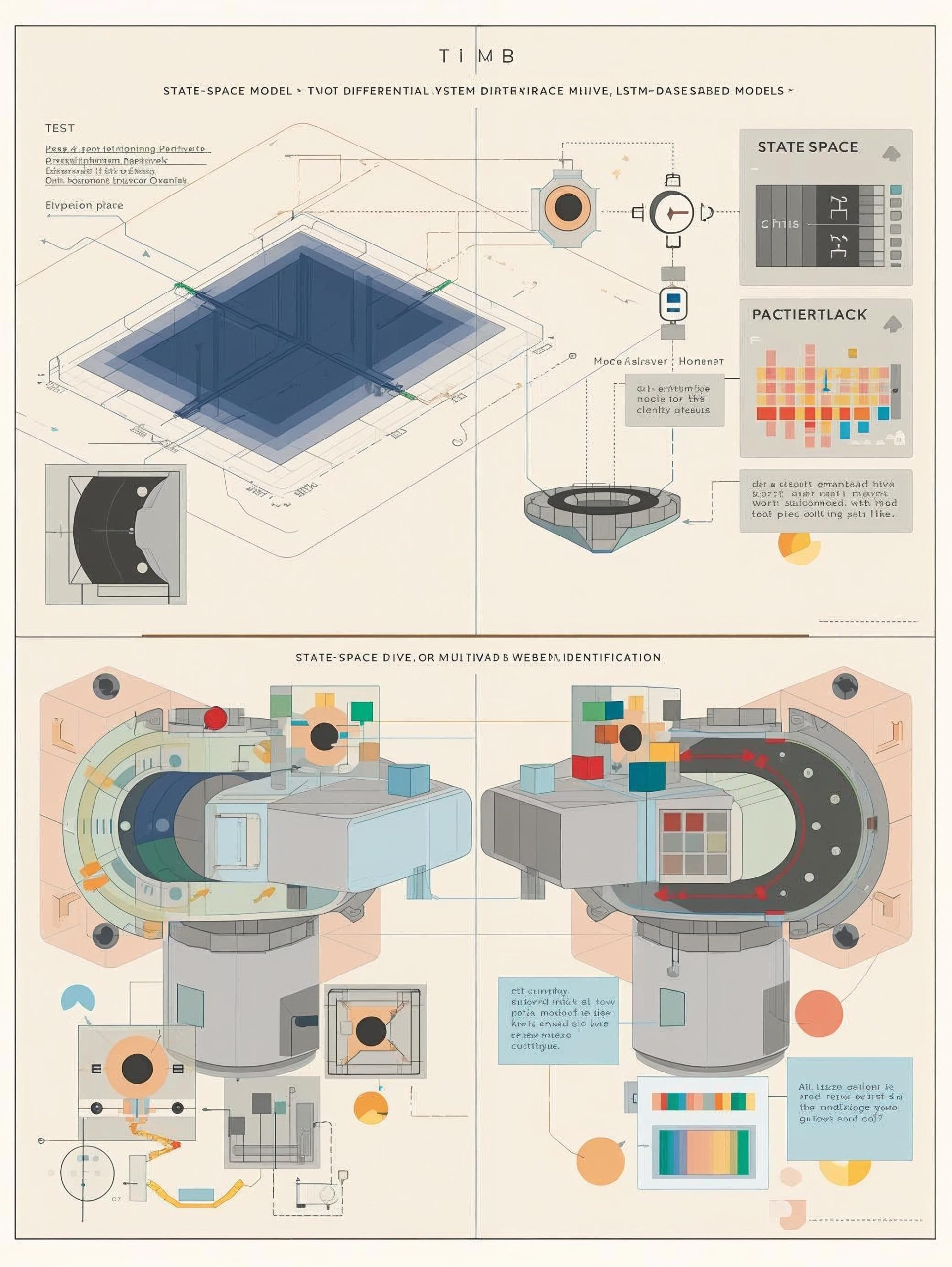
El modelado de robots móviles es crucial para la estimación de la odometría, el diseño del control y la navegación. Los modelos clásicos del estado-espacio (SSMs) se han utilizado tradicionalmente para la identificación del sistema, mientras que los avances recientes en el aprendizaje profundo, tales como redes de la memoria a corto plazo larga (LSTM), captan dependencias no lineales complejas. Sin embargo, existen pocas comparaciones directas entre estos paradigmas.
Este artículo compara dos enfoques de modelado multivariable para un robot de conducción diferencial: una SSM clásica y una red neuronal recurrente basada en LSTM.
Ambos modelos predicen las velocidades lineales (v) y angulares ((fórmula presentada)) del robot utilizando datos experimentales de una secuencia de navegación de cinco minutos. El rendimiento se evalúa en términos de precisión de la predicción, estimación de odometría y eficiencia computacional, con odometría de verdad de tierra obtenida a través de un método basado en SLAM en ROS2.
Cada modelo fue ajustado para una comparación justa: selección de orden para el SSM y búsqueda de hiperparámetros para el LSTM. Los resultados muestran que el mejor SSM es un modelo de segundo orden, mientras que el LSTM utiliza siete capas, 30 neuronas y ventanas deslizantes de 20 muestras. El LSTM alcanzó una FIT de 93,10% para v y 90,95% para (Fórmula presentada.), con una RMSE odometría de 1,09 m y 0,23 rad, mientras que el SSM la superó con valores de FIT de 94,70% y 91,71% y menor RMSE (0,85 m, 0,17 rad).
El SSM también fue más eficiente en recursos (0,00257 ms y 1,03 bytes por paso) comparado con el LSTM (0,0342 ms y 20,49 bytes). Los resultados sugieren que las SSM siguen siendo una opción sólida para la odometría precisa con baja demanda computacional, al tiempo que fomentan la exploración de modelos híbridos para mejorar la robustez en entornos complejos.
Al mismo tiempo, los modelos LSTM demostraron flexibilidad a través del ajuste de hiperparámetros, destacando su potencial para mejorar aún más la precisión con configuraciones refinadas.