

Encuentra más información en nuestro repositorio digital
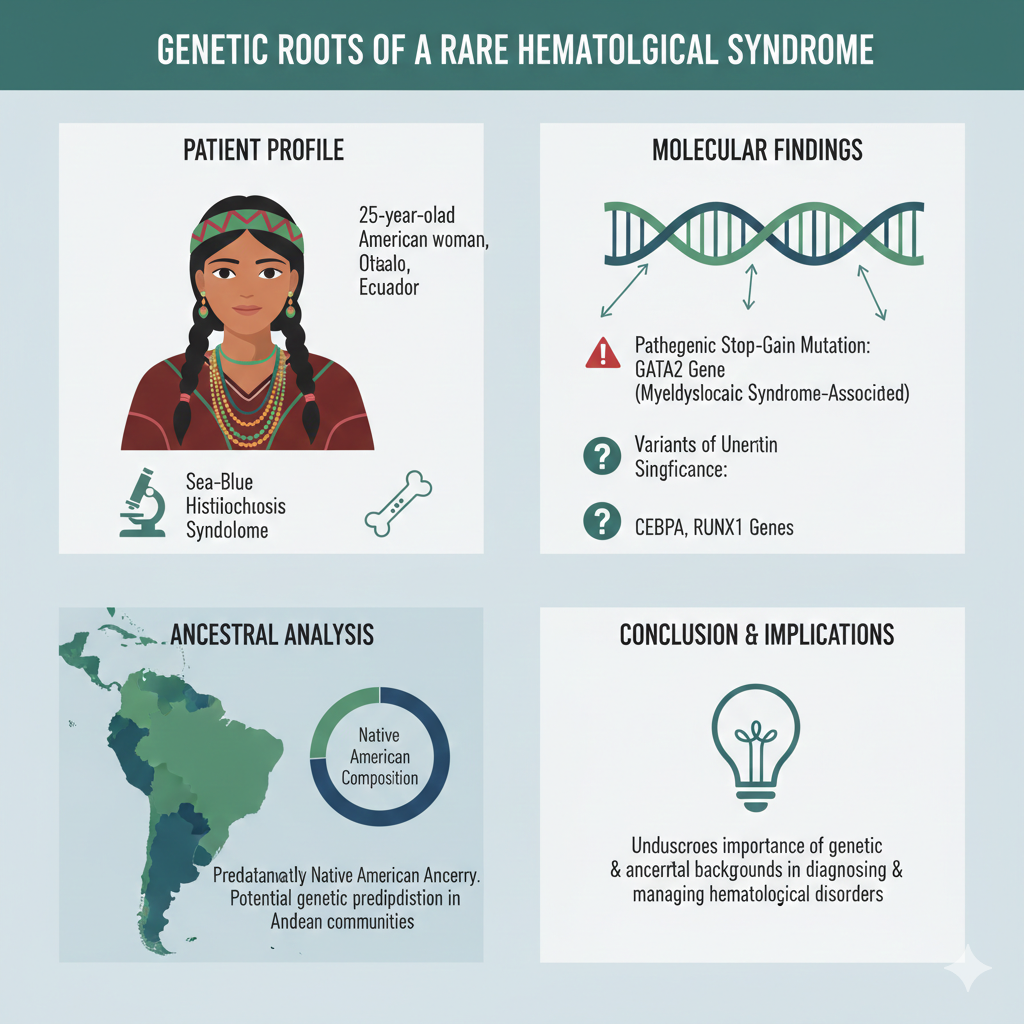
Este estudio presenta el caso de una mujer nativa americana de 25 años, de Otavalo, Ecuador, diagnosticada con histiocitosis azul marino y síndrome mielodisplásico.
La aspiración de la médula o sea reveló histiocitos azul marino, y la secuenciación de próxima generación identificó una probable mutación patógena stop-gain en el gen, asociada con síndrome mielodisplásico. Además, se encontraron variantes de importancia incierta en los genes y.
El análisis ancestral mostró una composición predominantemente indígena, lo que sugiere una posible predisposición genética específica de las comunidades andinas. El informe subraya la importancia de comprender los antecedentes genéticos y ancestrales en el diagnóstico y manejo de trastornos hematológicos.