

Encuentra más información en nuestro repositorio digital
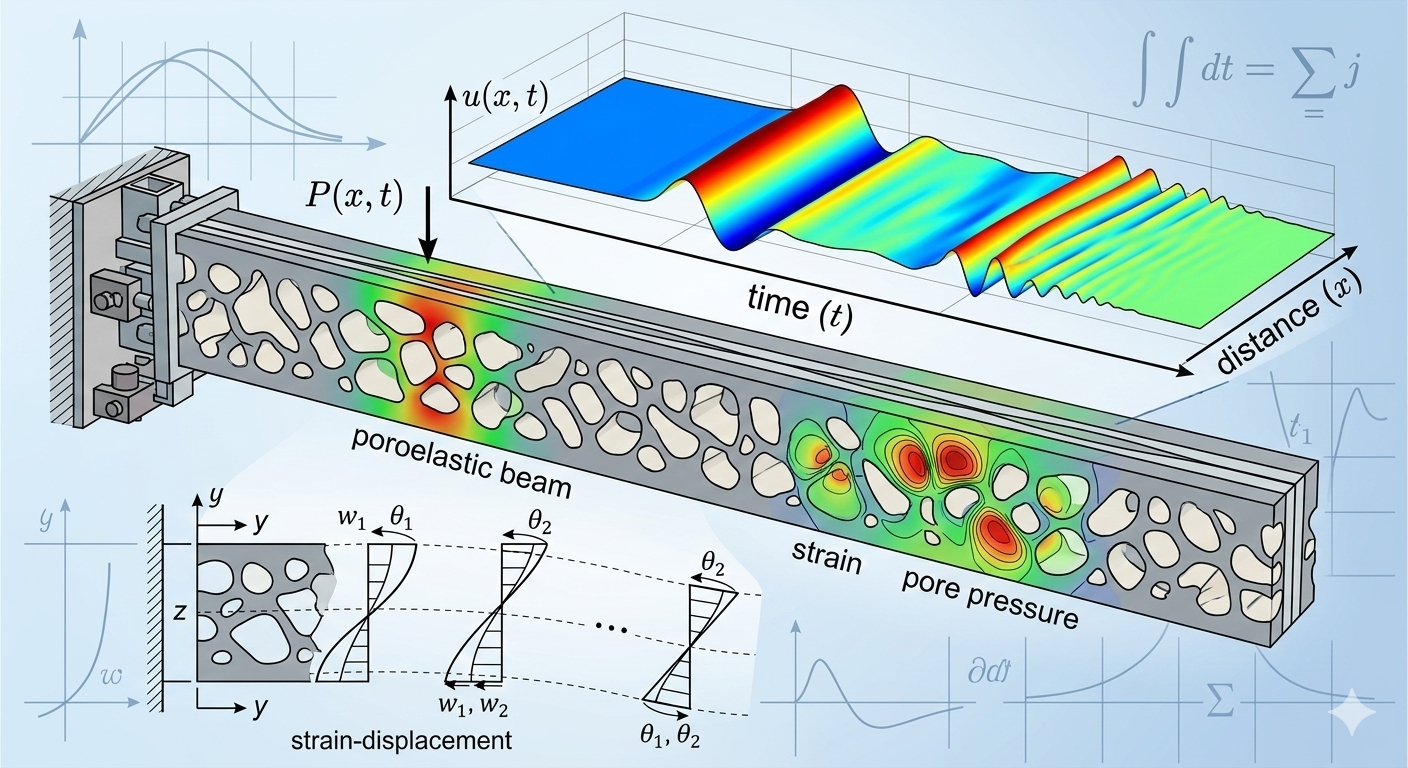
El presente trabajo utiliza la teoría de deformación por cizallamiento de orden superior para investigar el comportamiento de propagación de un haz de biocompuesto poroelástico (FGPB) colocado en un medio elástico. Se utilizaron titanio-hidroxiapatita y una aleación de oro-hidroxiapatita como ingredientes para dos biocompuestos. Se supone que la estructura está soportada por un medio elástico. Se utiliza un esquema mejorado de homogéneneización de ley de potencia que calcula la porosidad para calcular las características materiales efectivas del haz FGPB.
El resultado mostró que el número de ondas, los coeficientes de porosidad y los parámetros de Winkler-Pasternak tienen un papel cada vez mayor en la frecuencia de las ondas y la velocidad de fase de ambos biocompuestos. El índice de potencia también presentó diferentes comportamientos en dos biocompuestos. Enfatizando el análisis teórico, el estudio actual muestra cómo el cambio en los patrones de distribución del medio elástico y la cantidad de porosidad puede afectar el rendimiento y la eficiencia de los biocompuestos. Estos hallazgos pueden ser eficaces en el diseño y optimización de materiales biocompuestos con propiedades mecánicas deseables y diversas aplicaciones en la bioingeniería y los materiales compuestos.