

Encuentra más información en nuestro repositorio digital
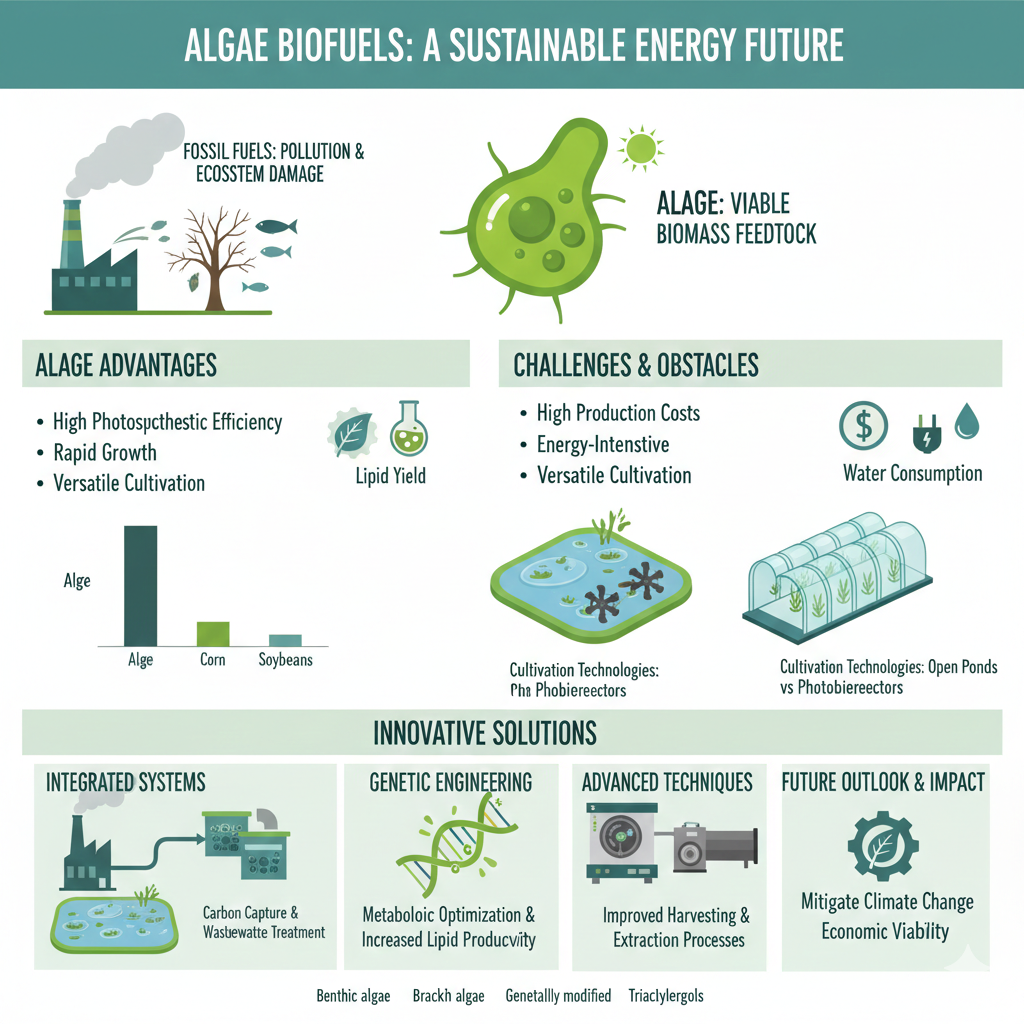
La sostenibilidad es fundamental para preservar los recursos esenciales para las generaciones futuras. El uso generalizado de combustibles fósiles genera una contaminación importante, que afecta gravemente a los ecosistemas terrestres y acuáticos por medio de fenómenos como la lluvia ácida. A pesar de su rápido crecimiento, alta eficiencia fotosintética y capacidad para prosperar en una variedad de condiciones, las algas se han convertido en una materia prima alternativa viable de biomasa para la producción de biocombustibles.
Esta revisión explora la eficiencia y la escalabilidad de los biocombustibles a base de algas, centrándose en factores clave como el rendimiento de la biomasa, el contenido de lípidos y las tecnologías de conversión. Las algas tienen un mayor rendimiento lipídico en comparación con los biocombustibles tradicionales como el maíz o la soja, lo que las convierte en una opción atractiva para la producción de combustible a gran escala. Sin embargo, varios obstáculos dificultan la adopción generalizada de los biocombustibles a base de algas, incluidos los altos costos de producción, el cultivo intensivo en energía y el consumo de agua. En este documento también se examina la eficiencia y la idoneidad de diversas tecnologías de cultivo, incluidos los estanques abiertos y los fotobiorreactores, para la producción a gran escala.
La producción de biocombustibles a partir de algas podría hacerse más viable desde el punto de vista económico y ecológicamente sostenible mediante la integración de la tecnología de captura de carbono y el tratamiento de las aguas residuales. Los avances en ingeniería genética y optimización metabólica están aumentando aún más la productividad de los lípidos, ofreciendo perspectivas prometedoras para aplicaciones a gran escala. Este estudio ofrece además un análisis de las técnicas de ingeniería genética destinadas a aumentar el rendimiento de los biocombustibles.
El estudio hace hincapié en el potencial de los biocombustibles a base de algas para servir como alternativas respetuosas con el medio ambiente a los combustibles fósiles tradicionales, destacando estos enfoques innovadores. Si bien la evaluación reconoce que los biocombustibles basados en algas pueden reducir la dependencia de los combustibles fósiles y ayudar a mitigar el cambio climático, también señala que es necesario realizar más investigación y desarrollo para superar los actuales desafíos financieros y tecnológicos.
Esta revisión explora los recientes avances en el cultivo de algas, las técnicas de recolección y los procesos de extracción de biocombustibles. Su objetivo es presentar una comprensión global del estado actual de las algas como materia prima sostenible y eficaz para la producción de biocombustibles, junto con perspectivas futuras.