

De la comida al mal funcionamiento: explorando vías moleculares, biomarcadores e intervenciones en salud cardiometabólica postprandial
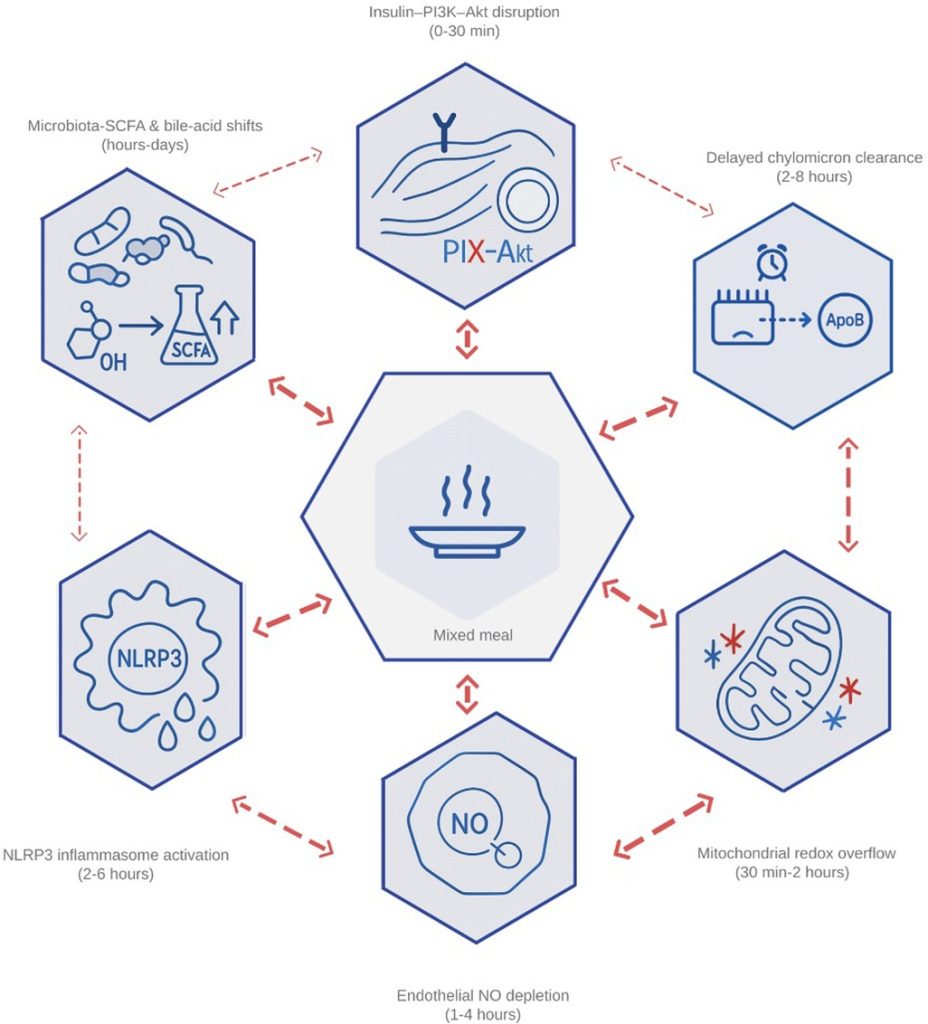
Encuentra más información en nuestro repositorio digital Las enfermedades cardiometabólicas -incluidas la diabetes tipo 2, las enfermedades cardiovasculares y la disfunción metabólica asociada a la hepatopatía esteotítica- están cada vez más impulsadas por una exposición casi continua después de las comidas a aumentos bruscos de glucosa y lípidos que a menudo se pasan por alto en las pruebas tradicionales de ayuno. Esta revisión prioriza los estudios humanos de 2020 a 2025 y utiliza trabajos anteriores solo como anclajes fundamentales; se excluyeron informes no ingleses y se citan hallazgos preclínicos únicamente para el contexto mecanicista. La evidencia converge en seis procesos que amplifican el riesgo dentro de las horas posteriores a comer: alteración de la señalización de la insulina, eliminación tardía de los lípidos dietéticos, estrés mitocondrial y oxidativo, pérdida de óxido nítrico endotelial, inflamación mediada por el inflamatorio y interacciones microbioma-hormona. Los marcadores dinámicos después de la comida y los compuestos simples como el índice triglicérido-glucosa superan las medidas de ayuno para identificar riesgos y guiar la atención. Las estrategias prácticas para acortar la «ventana de daño» incluyen comidas al estilo mediterráneo con bajos intercambios de índice glucémico y grasas insaturadas, distribución temprana de energía diaria y alimentación temprana restringida por el tiempo, una pequeña porción de proteína antes de la comida y caminata breve después de la comida. Medicamentos de acción rápida: agonistas del receptor insulinotrópico tipo péptido 1 y polipeptídeo dependiente de la glucosa, análogos de la insulina de acción rápida, inhibidores del cotransportador de sodio-glucosa 2 tomados antes de las comidas e inhibidores de la convertasa proproteica subtilisina/kexina de tipo 9; otros picos bruscos, mientras que el monitoreo continuo de la glucosa con retroalimentación algorítmica permite ajustes específicos para cada persona y conscientes del tiempo. Un flujo de trabajo escalonado-pantalla, estratificación y personalización-reestructura la prevención y el tratamiento en torno a la fisiología después de las comidas, con particular relevancia para entornos donde los recursos son limitados. Accede al artículo completo aquí
Evaluating gene expression patterns for NF-κB1, TNF, and VEGF A& VEGF B in a mouse model of SARS-CoV-2 infection
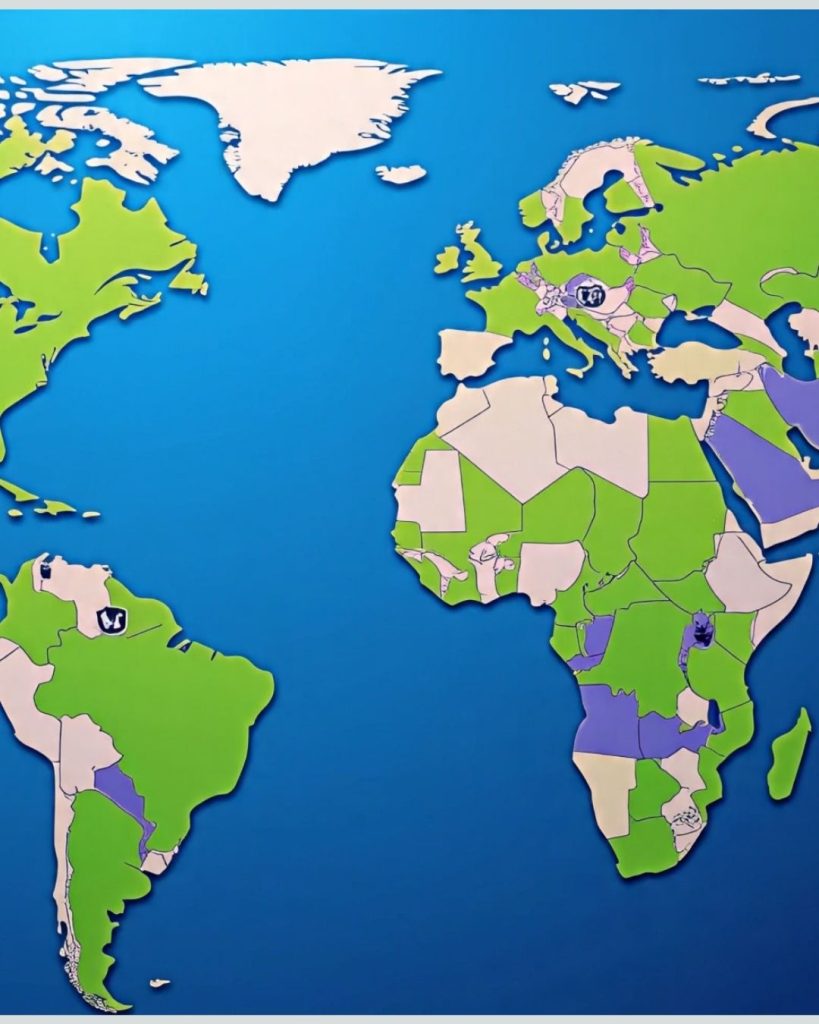
Encuentra más información en nuestro repositorio digitalLa vigilancia basada en eventos es una estrategia importante para la detección temprana de brotes de todo tipo de enfermedades, especialmente en países de ingresos bajos y medianos. Esta investigación se centra en un mapa de evidencias, que sistematiza y representa gráficamente la información recopilada sobre la efectividad de diversas intervenciones en estos contextos. Las intervenciones clave incluyen la calidad de los datos, la capacitación, la comunicación, la colaboración multisectorial, la oportunidad, la reducción de la mortalidad y morbilidad, la rentabilidad, la respuesta temprana a eventos, la sensibilidad, las señales y la utilidad para eventos reales. En este estudio, se realizó una revisión y evaluación de la literatura sobre un total de 22 revisiones sistemáticas; 15 cumplieron con los criterios de inclusión, conteniendo un total de 82 artículos primarios de acceso abierto. La calidad de la evidencia se evaluó utilizando la herramienta AMSTAR, identificando revisiones con alta, media y baja fiabilidad. Los resultados muestran que la vigilancia basada en eventos se ha implementado con éxito en países como Estados Unidos, Brasil, China, Australia, Canadá, India, Japón, Nueva Zelanda, Taiwán, Países Bajos, Emiratos Árabes Unidos y otros. A partir de la evidencia recopilada en estos países, queda claro que la vigilancia basada en eventos mejora la detección temprana de brotes, la respuesta a alertas y minimiza la propagación de enfermedades. Se necesitan más investigaciones y mejoras en estas estrategias para una detección y respuesta tempranas efectivas ante eventos de salud pública. Accede al artículo completo aquí
Artificial Intelligence in Ecuadorian SMEs: Drivers and Obstacles to Adoption
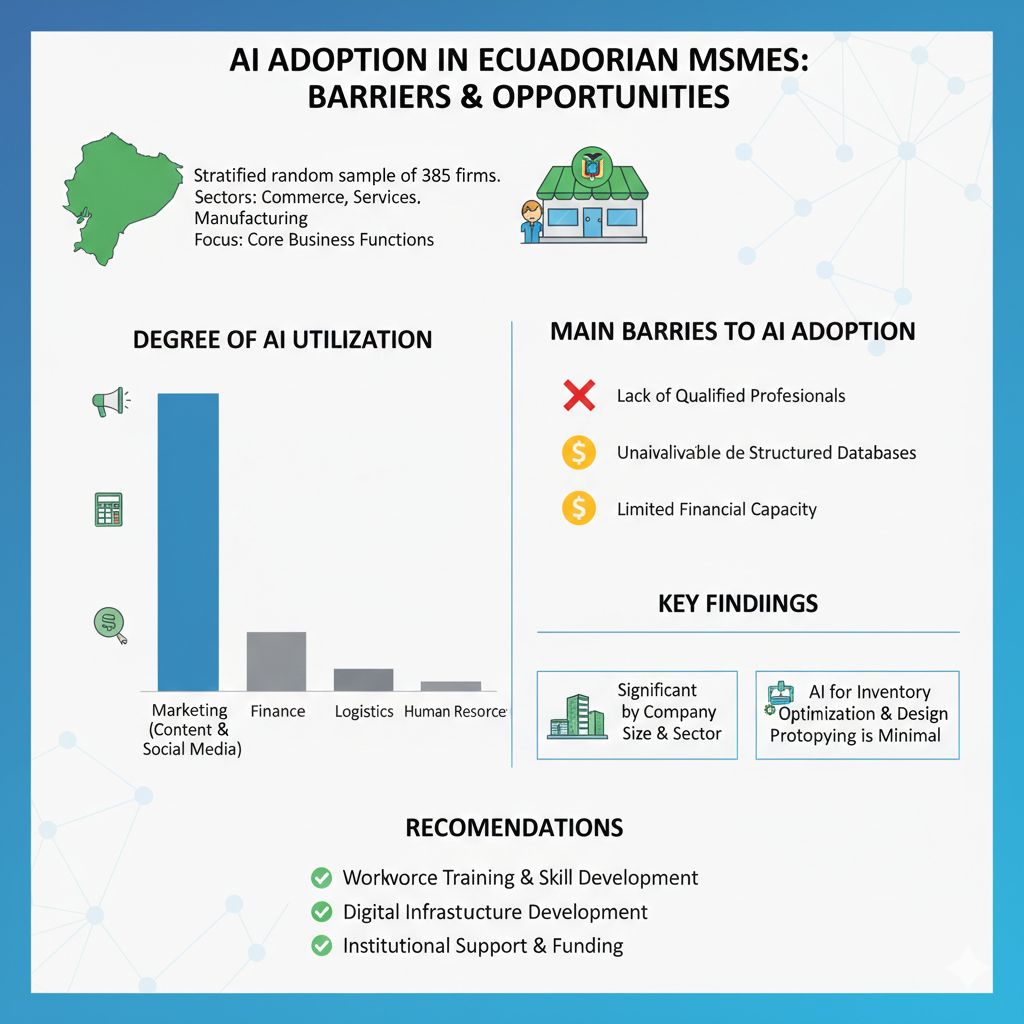
https://surl.li/qomdus This study analyzes the current state of artificial intelligence (AI) adoption among micro-, small-, and medium-sized enterprises (MSMEs) in Ecuador, with a focus on its application across core business functions. Using a stratified random sample of 385 firms from the most representative economic sectors, a survey instrument was designed to assess three dimensions: access to AI-enabling conditions, degree of AI utilization, and organizational characteristics. The results reveal that AI adoption remains limited and highly concentrated in marketing-related functions, particularly in content generation and social media automation, with minimal implementation in finance, logistics, and human resource management. The study also identifies the main barriers hindering AI adoption. The lack of qualified professionals and the unavailability of structured databases emerged as the most critical obstacles, followed by limited financial capacity. One-way ANOVA and Kruskal–Wallis tests confirmed significant differences in AI adoption levels based on company size and sector, especially in areas such as inventory optimization and design prototyping. These findings highlight a gap between the potential of AI technologies and their real-world implementation in Ecuadorian MSMEs. They underscore the need for targeted strategies focused on workforce training, digital infrastructure development, and institutional support to promote broader and more effective AI integration. https://doi.org/10.3390/info16060443
Analysis of the Influence of Sugarcane Bagasse Fibers in the Natural State on the Mechanical Properties of Concrete
This study aims to analyze the influence of sugarcane bagasse fiber (SCBF) without treatment on concrete and its impact on carbon footprint production. This review studies the impact of SCBF on the compressive strength, flexural strength, direct tensile strength, and elasticity modulus, considering fiber percentages of 1%, 3%, 5%, and 6%. The results showed that SCBF had a negative influence on concrete because as the percentage of fiber increased, it started to become invasive in the concrete mix and proportionally influenced the strength reduction, obtaining a maximum decrease of 60.96% in the compressive strength. However, the CO2 emissions decreased as the fiber percentage increased, generating maximum emission savings of 17.19%. https://doi.org/10.1080/15440478.2025.2451407
Retraction notice to ‘Seaweed biomass as a sustainable resource for synthesis of ZnO nanoparticles using Sargassum wightii ethanol extract and their environmental and biomedical applications through Gaussian mixture model’ [Environ. Res. 249 (2024) 117464] (Environmental Research (2024) 249, (S0013935123022685), (10.1016/j.envres.2023.117464))
This article has been retracted: please see Elsevier policy on article withdrawal (https://www.elsevier.com/about/policies-and-standards/article-withdrawal). This article has been retracted at the request of the Editor. During the course of the investigation, the assessing editor noted an excessive amount of citations in the Introduction, including a citation to this article itself. It was also discovered that the original and accepted versions of the manuscript contained data/figures previously published in Biomass Conv. Bioref. 14, 26173–26191 (2024) https://doi.org/10.1007/s13399-023-04977-1, by different authors, which were then removed after the manuscript was accepted, although some of the figures in the supplementary information from that source remain. The Figure S5 in the supplementary is taken from Youtube videos such as https://www.youtube.com/watch?v=9LsgBqm3yqs and https://www.youtube.com/watch?v=5sYW9JdAj_4. One of the conditions of submission of a paper for publication is that authors declare explicitly that their work is original and has not appeared in a publication elsewhere. Re-use of any data should be appropriately cited. As such this article represents a severe abuse of the scientific publishing system. The scientific community takes a very strong view on this matter and apologies are offered to readers of the journal that this was not detected during the submission process. Finally, an unauthorised authorship change was made when the revised version of this paper was submitted, following suggestions for relatively minor revisions from the reviewers and Guest Editor, with five authors – Yu Bai, Yan Cao, Yiding Sun, Faiz Abdulaziz Alfaiz, and Elimam Ali – being added to the paper to replace three other authors who were deleted. No satisfactory explanation was given for this change, nor was it approved by the editor. According to the Credit author statement, Authors Cao and Sun appear to have been involved with conceptualisation and writing the original draft, respectively, despite both authors being added at revision stage.This authorship change breaches the policies of the journal and as a result of this and the concerns outlined in the previous paragraph, the editors no longer have confidence in this paper and are retracting it. The journal apologises for not having identified the problematic authorship change during the review process and for any resulting inconvenience. https://doi.org/10.1016/j.envres.2025.122794
Advanced inorganic membranes for water purification: FeZr-MOF/GO composites with optimized adsorption performance
This study introduces FeZr-MOF/Graphene Oxide (GO) composite membranes as an innovative application of inorganic membrane technology for advanced separation and purification. These membranes were engineered to efficiently remove industrial dyes such as Congo red and methylene blue from aqueous solutions by leveraging the high surface area, chemical stability, and selective adsorption capabilities of FeZr-Metal-Organic Framework (FeZr-MOF).Based on laboratory evaluations, the composite membranes exhibited strong adsorption performance, achieving 87.5 mg/g capacities for Congo red and 80.2 mg/g for methylene blue. Integrating GO into the membrane matrix enhanced hydrophilicity, water permeability, and anti-fouling behavior, as evidenced by over 90 % permeability recovery after multiple cleaning cycles. This research reflects the latest advancements in inorganic membrane technology and bridge material innovation with industrial water purification needs. Machine Learning (ML), implemented via the Random Forest (RF) algorithm, was used to predict the impact of key operational parameters—pH, dye concentration, and contact time—on removal performance, and the model’s predictions aligned closely with experimental trends.These findings, supported by experimental data and predictive modeling, highlight the potential of FeZr-MOF/GO membranes as a scalable and robust material for sustainable water purification applications. https://doi.org/10.1016/j.seppur.2025.133899